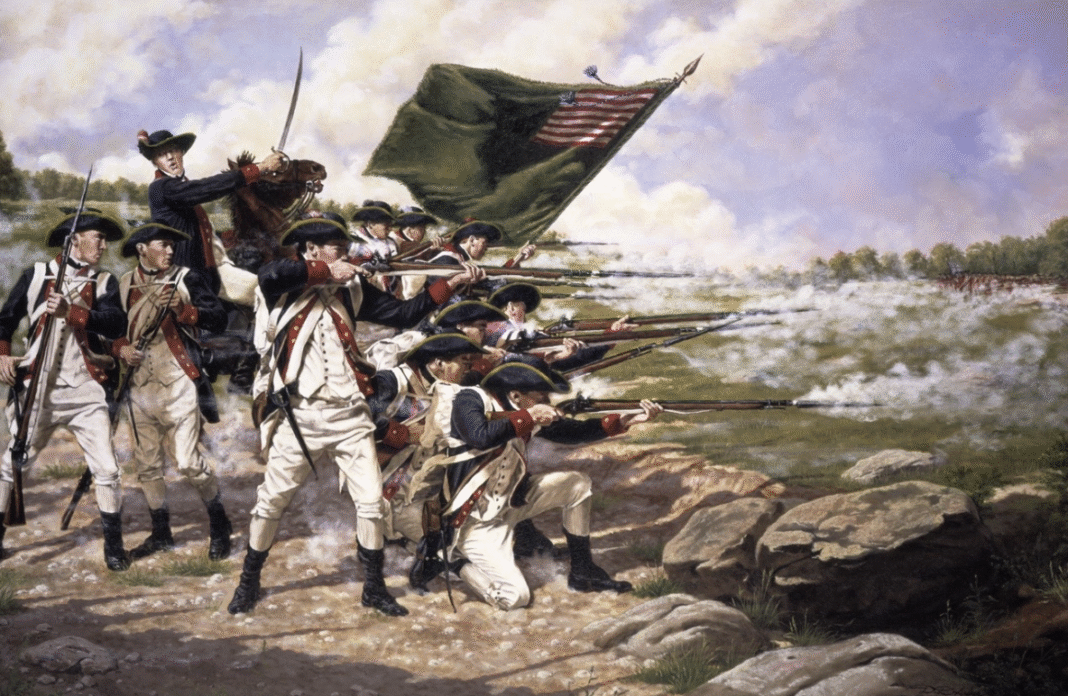

The territory of the modern Bronx played a crucial role in the American Revolutionary War. It became the stage for fierce battles, guerrilla raids, and spy operations. It was here, on the lands of what was then Westchester County, that the fate of the American Revolution was largely decided. In this article on bronx-yes.com, we explore the key events of the war in the Bronx. You will learn about the Neutral Ground and little-known historical facts that changed the course of the fight for the independence of the United States.
Westchester’s Neutral Ground During the American Revolution
After the New York Campaign of 1776, the British Army entrenched itself in Manhattan. The island became their main military hub for nearly seven years. To bolster their defenses, the British stationed troops in the southern part of Westchester County. Meanwhile, American Patriot forces held the northern areas. This created a dangerous borderland between the two armies.
As a result, the infamous “Neutral Ground” was born. It stretched from Dobbs Ferry on the Hudson River to Mamaroneck on the Long Island Sound coast, covering about 150 square miles. Despite its name, there was nothing neutral about it. The area quickly turned into a true no man’s land where the law simply ceased to exist.
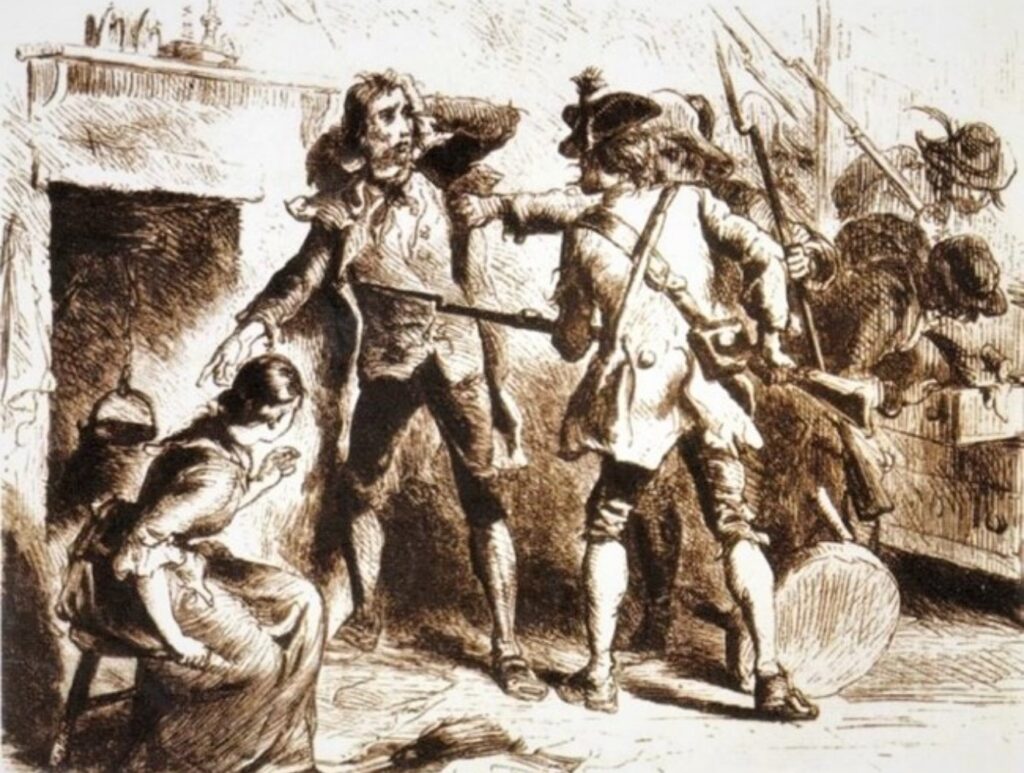
The absence of authority made the region incredibly dangerous. Armed gangs, deserters, looters, and guerrilla squads operated with almost total impunity. Ordinary residents were caught in the crossfire. Stripped of any security guarantees, they struggled to survive every day between two hostile armies.
The strategy of Continental Army Commander-in-Chief George Washington played a significant role in these developments. He wanted to preserve his army as an effective fighting force at all costs. Because of this, Washington deliberately avoided using regular troops for police duties in the “Neutral Ground”. Protecting civilians did not become a separate mission for the army, as it could weaken their frontline capabilities.
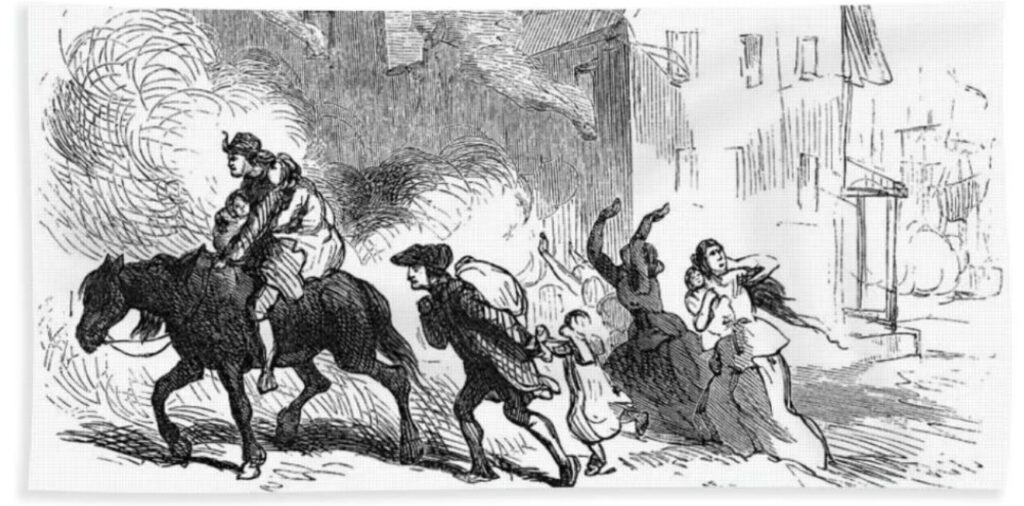
For the locals, this decision had dramatic consequences. Fleeing constant raids and looting, families abandoned their farms and homes en masse. Some moved in with relatives in safer areas, while others sought shelter in refugee camps. The once-peaceful agricultural region gradually emptied out. For those who couldn’t leave, life turned into a daily battle for survival amidst chaos, fear, and endless war.
“Cowboys” and “Skinners”: Banditry and Espionage in the Bronx
When authority effectively collapsed in the “Neutral Ground”, armed gangs quickly filled the void. Two groups struck the most fear into the hearts of locals: the “Cowboys” and the “Skinners.” Although they supported opposing sides in the conflict, the difference between them was almost imperceptible to civilians.
The “Cowboys” were considered British loyalists. Their primary source of income came from raiding farms: they would steal cattle from locals and sell it to the British garrison in New York. The squads consisted mostly of local mercenaries, with the brigade led by James and Oliver De Lancey becoming the most notorious.
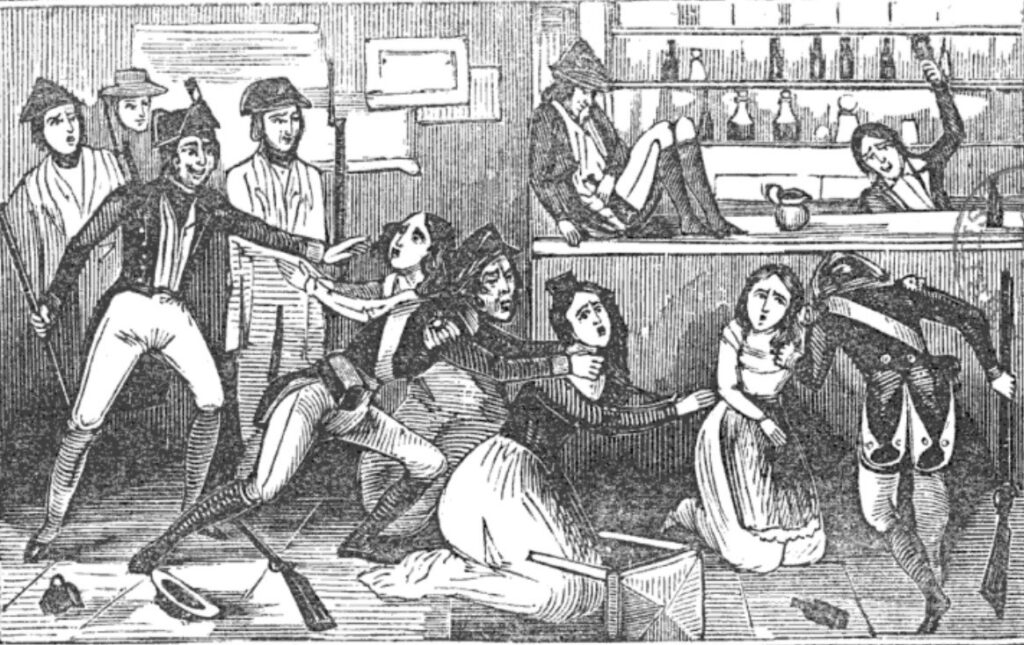
Their adversaries were the “Skinners”. Formally, they were supposed to counter loyalists and protect the local population. In practice, however, these squads often resorted to robbery, brutal requisitions, and violence. They left just as much devastation in their wake as their enemies.
The “Neutral Ground” became not only a haven for looters but also a major hub for espionage. Agents from both armies operated here, gathering intelligence on troop movements, supply routes, and enemy plans. Among the most famous spies were British agent Ann Bates, American spy Enoch Crosby, and double agent Elijah Hunter, who worked for both sides. Under these conditions, any random passerby could turn out to be an informant. Trust became a luxury few could afford.
Bronx Forts: Strategic Defense and the Battle for the Route to Manhattan
During the American Revolutionary War, controlling river crossings and roads was crucial. One of the most important structures was Kings Bridge, which spanned Spuyten Duyvil Creek and connected Manhattan with the Bronx. Whoever held this crossing effectively controlled the movement of troops, weapons, and supplies between the island and the mainland.
That is why, in 1776, American troops built a system of defensive fortifications around the bridge to hold back the British advance.
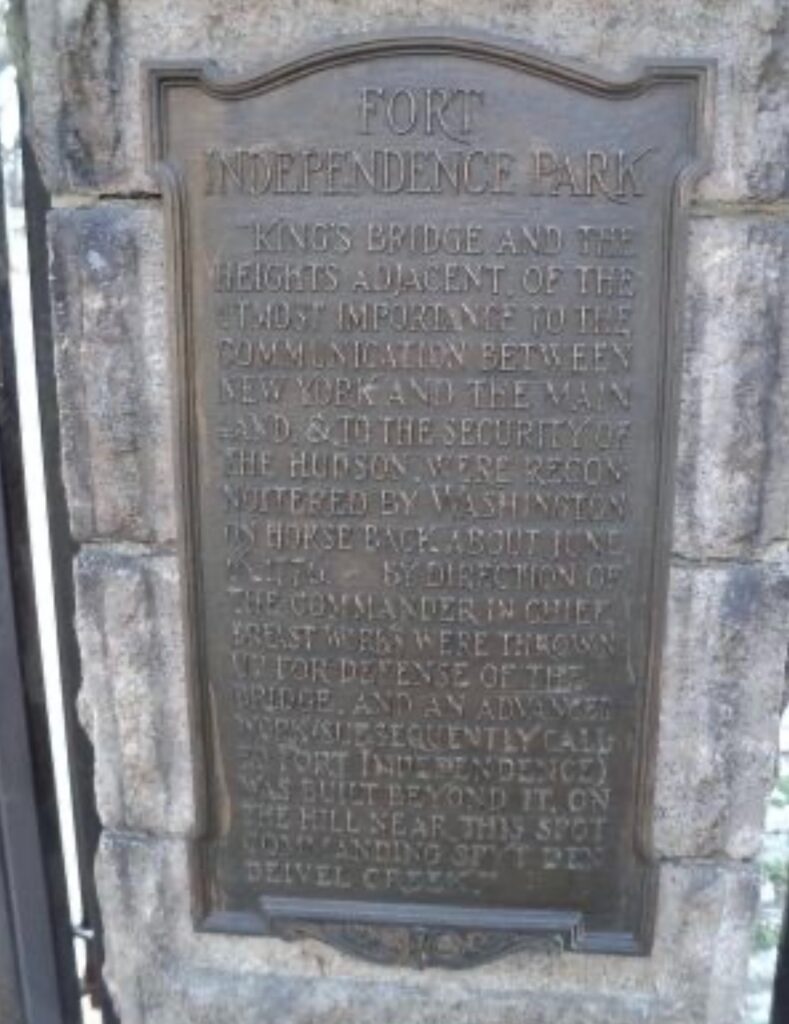
One of the most significant defenses was Fort Independence, built on the Montgomery farm atop a height known as Tetard’s Hill. However, the Americans failed to hold this position, and the fort was soon captured by British troops.
The fort’s history took an unexpected turn nearly two centuries later. In 1958, while the area was being prepared for a housing complex, amateur archaeologists stumbled upon the remains of the old fortifications. During excavations, they found wall fragments 16 to 19 inches thick, likely belonging to a powder magazine and officers’ quarters. They also unearthed six-pounder cannonballs, musket balls, shards of rum bottles, and metal tent pegs. These discoveries helped historians better understand the daily life of an 18th-century garrison.
Another key defensive point was Fort Number Two, better known as Fort Swartwout. It was built on Spuyten Duyvil Hill, offering an excellent vantage point of the surrounding area. However, a strategic location didn’t guarantee comfortable conditions for the soldiers.
German lieutenant John Charles Philip von Krafft left detailed accounts of the garrison’s life. Stationed there in 1778, he frequently noted the constant hunger and severe exhaustion of the military personnel in his diary. According to him, the devastatingly small rations often led soldiers to desert. They received “barely 5 pounds of bread for 7 days, and for two days rice was given instead of bread.” Such dire conditions became a primary reason for mass desertions, even from heavily fortified forts.
Major Battles for US Independence in the Bronx
It was within the “Neutral Ground” that battles unfolded that saved the Continental Army from utter defeat at the dawn of the American Revolutionary War. Despite the overwhelming numerical superiority of the British, American troops managed to win the most valuable resource of all — time.
The Battle of Pell’s Point (1776): How Colonel Glover Saved the Army
On October 18, 1776, the Battle of Pell’s Point erupted in the area of modern-day Pelham Bay Park. The commander of the American detachment, Colonel John Glover, had only about 750 men. Yet, he masterfully orchestrated a series of ambushes against a 4,000-strong British and Hessian force led by Generals William Howe and Henry Clinton.
The forces were drastically unequal. The Americans lost eight men killed and another thirteen wounded. In contrast, the British coalition suffered much heavier casualties: among the Hessian units alone, estimates suggest between 200 and 1,000 soldiers were killed or wounded. The British themselves lost three men killed and twenty wounded.
Although the British ultimately held the battlefield, the resilience of Glover’s detachment achieved its main objective. His troops delayed the enemy’s advance just long enough for George Washington’s main forces to safely retreat to White Plains and avoid encirclement.
Alexander Hamilton’s Artillery in the Battle of White Plains
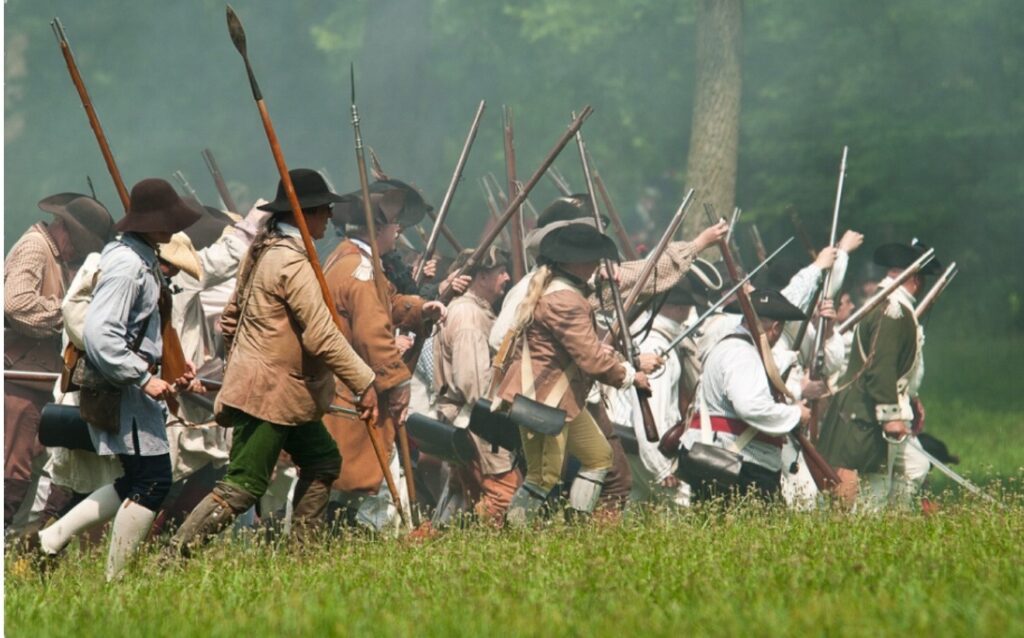
Ten days later, on October 28, 1776, the armies clashed again in the Battle of White Plains. American units took up defensive positions on Chatterton Hill, using the natural terrain and even tall cornstalks as cover from enemy fire. Alexander Hamilton’s artillery played a pivotal role in the fight. Its blistering fire helped hold back the massive British assault, allowing the Continental Army to continue an organized retreat.
During the American Revolutionary War, the Bronx was more than just a backdrop or a transit zone. It became a bloody battlefield where the fate of a new nation was literally decided. This history serves as a powerful reminder that the modern streets of the Bronx still harbor the memory of the courage and tragedies of those turbulent times.