
World War I was a turning point in the history of the Bronx, accelerating its development into one of New York City’s most vital boroughs. Military mobilization, the construction of hospitals and military facilities, industrial growth, and massive waves of migration profoundly changed the lives of local residents. In this article on bronx-yes.com, we explore how World War I impacted the Bronx, transforming its infrastructure, economy, and society, and we highlight the events of this era that forever changed the borough’s history.
Subway Expansion and the Demographic Boom in the Bronx
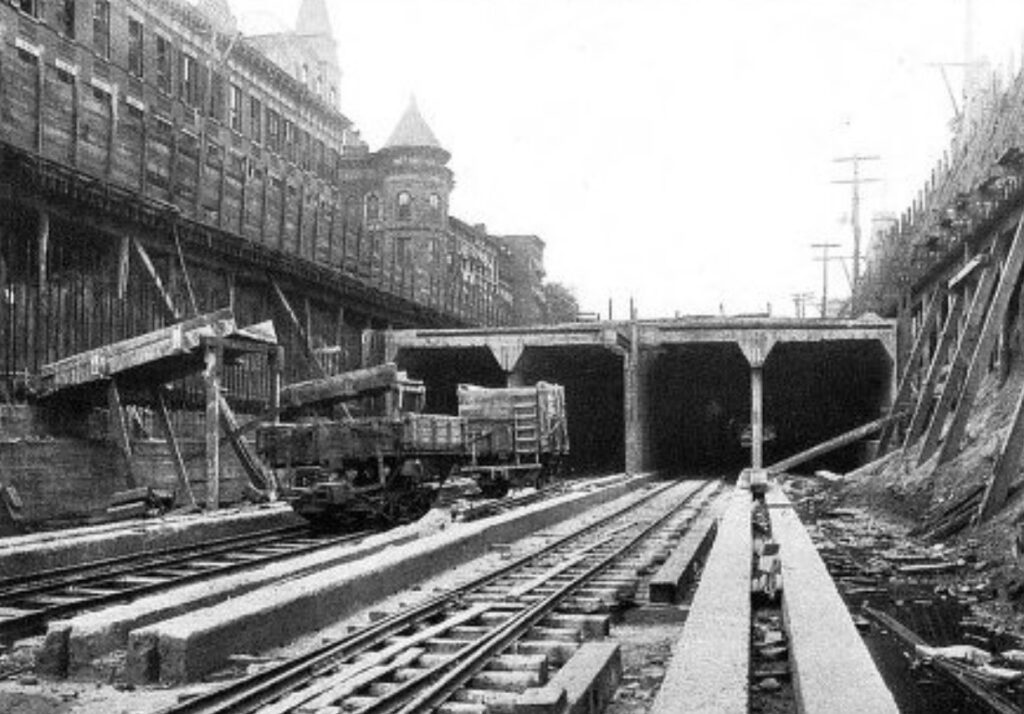
In the early 20th century, the Bronx experienced one of the most rapid periods of development in its history. The borough, which until recently had consisted mostly of private estates and vast tracts of land, began to transform completely in just a few years. The expansion of the New York City Subway played a crucial role in this shift.
The launch of new routes, including the IRT White Plains Road Line and the Jerome Avenue Line in 1917, made the Bronx much more accessible to Manhattanites. Commutes grew shorter, and the demand for housing skyrocketed. Developers eagerly bought up large plots of land where Victorian mansions had recently stood, replacing them with modern apartment buildings. This sparked a massive building boom that forever altered the borough’s urban landscape.
For hundreds of thousands of European immigrants, the Bronx symbolized a fresh start. Irish, Italian, German, and Jewish families moved here, eager to leave behind the overcrowded slums of the Lower East Side. In the Bronx, they found more spacious apartments, cleaner streets, and better living conditions. It was during this period that the borough became a major hub for New York’s growing working and middle classes.
Economic Crisis and the Food Riots of 1917
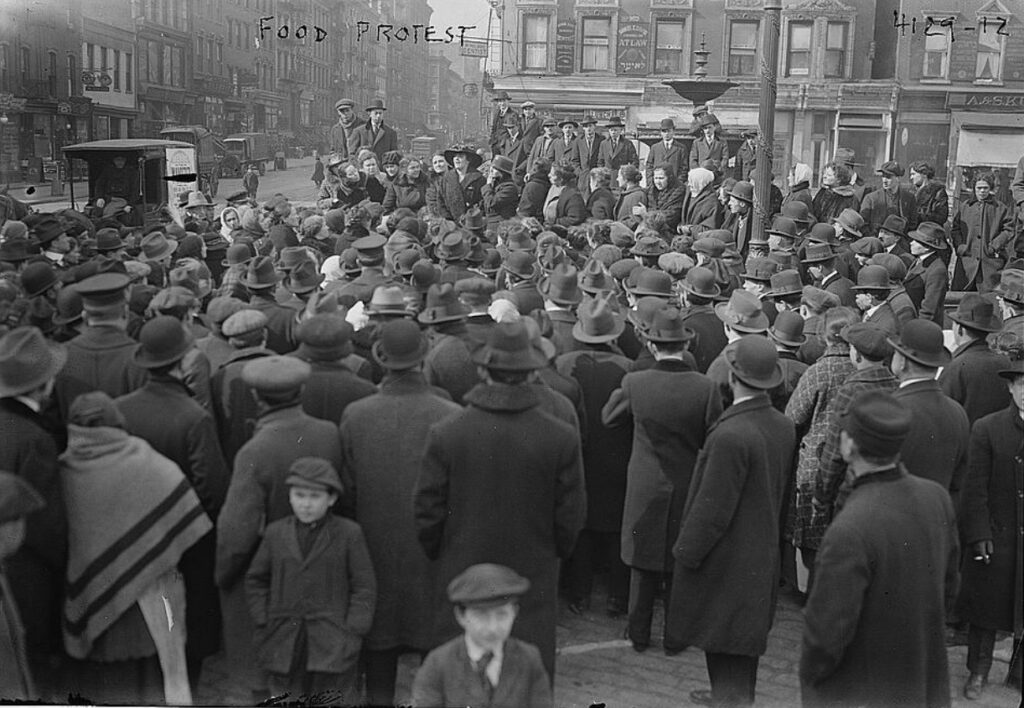
However, the borough’s rapid growth coincided with the severe hardships brought on by World War I. The wartime economy hit family budgets hard. By early 1917, the cost of food had surged, with some staples doubling or even tripling in price. For many working-class families, this meant a daily struggle just to survive.
Public frustration quickly spilled onto the streets of New York. Women were the driving force behind these protests, demanding fair food prices and the ability to feed their children. During the food riots, they overturned the pushcarts of vendors suspected of price gouging. They urged their neighbors to boycott inflated goods and demanded immediate government intervention. These uprisings became one of the most striking examples of how wartime economic struggles affected the daily lives of New Yorkers.
Military Bases and Hospitals: The Bronx as a U.S. Home Front Hub
After the United States entered World War I in April 1917, the Bronx quickly became a crucial home front center for the nation. It was a place where Navy recruits trained, wounded soldiers recovered, and medical personnel prepared to save lives on the battlefields of Europe.
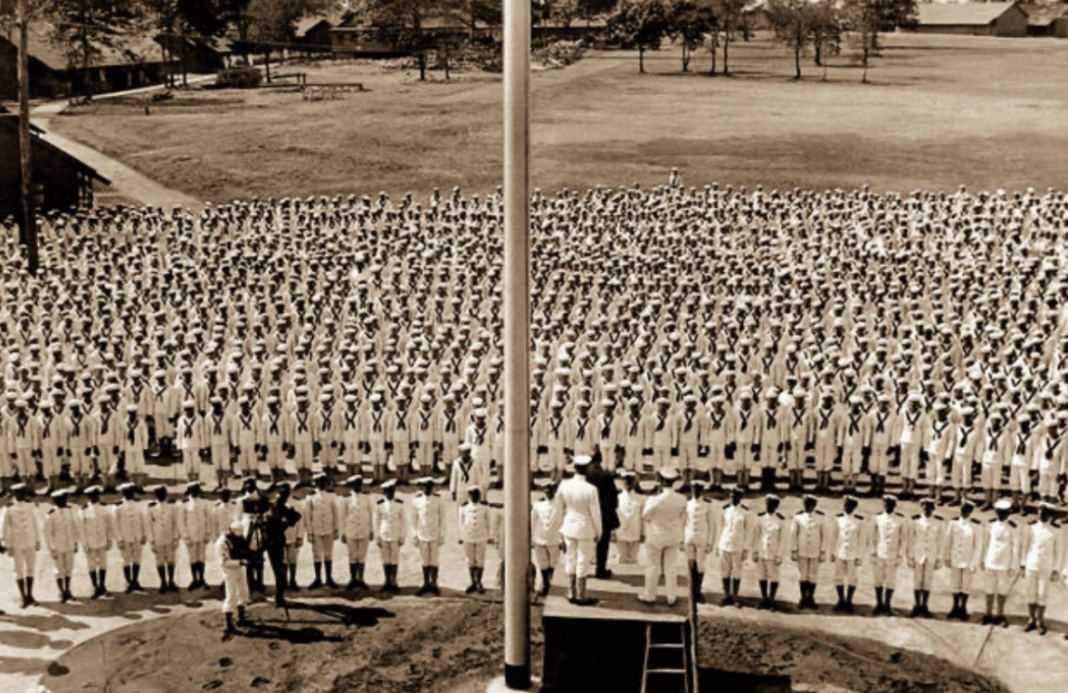
One of the most significant facilities was the Pelham Bay Naval Training Station, located on the Rodman’s Neck peninsula in Pelham Bay Park. Operating from 1917 to 1919, the base covered around 280 acres, with an additional 90 acres dedicated to a military hospital.
Thousands of future sailors received their training here. Among them were men who would later become famous far beyond the military. Future Hollywood stars Humphrey Bogart and Edward G. Robinson served at the base before achieving global screen fame after the war.
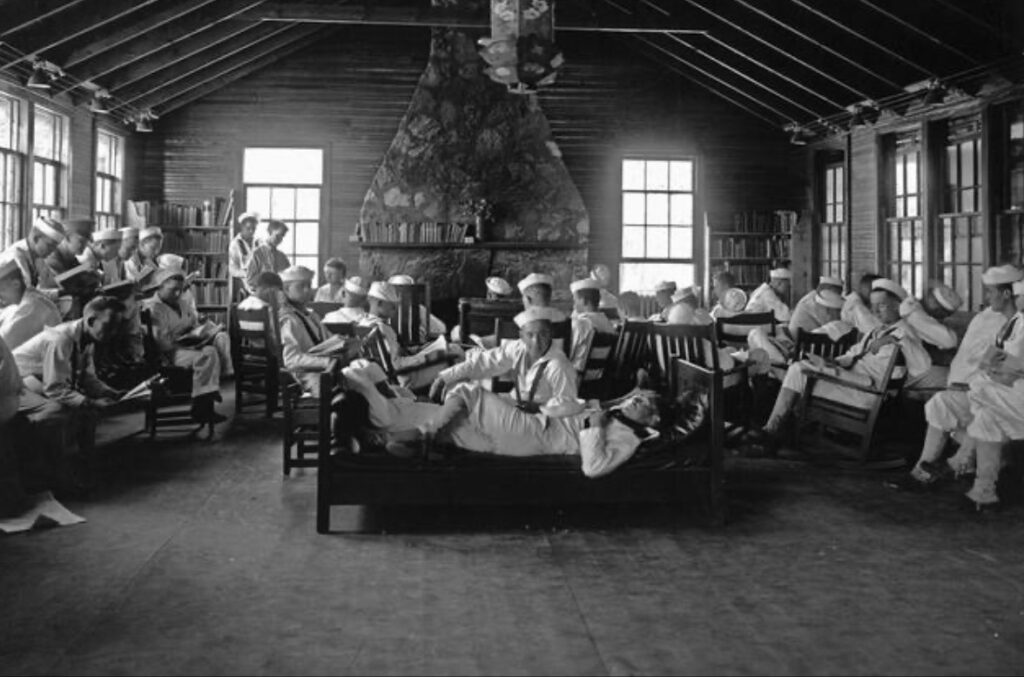
Life for the servicemen wasn’t limited to training. Clubs and recreational areas organized by the Knights of Columbus, the YMCA, and the American Red Cross worked tirelessly to keep the recruits’ morale high.
However, in 1918, the base faced a new enemy: the “Spanish flu” pandemic. The disease spread rapidly among the troops, resulting in 2,399 reported infections and 145 deaths. This outbreak remains one of the most tragic episodes in the training center’s history.
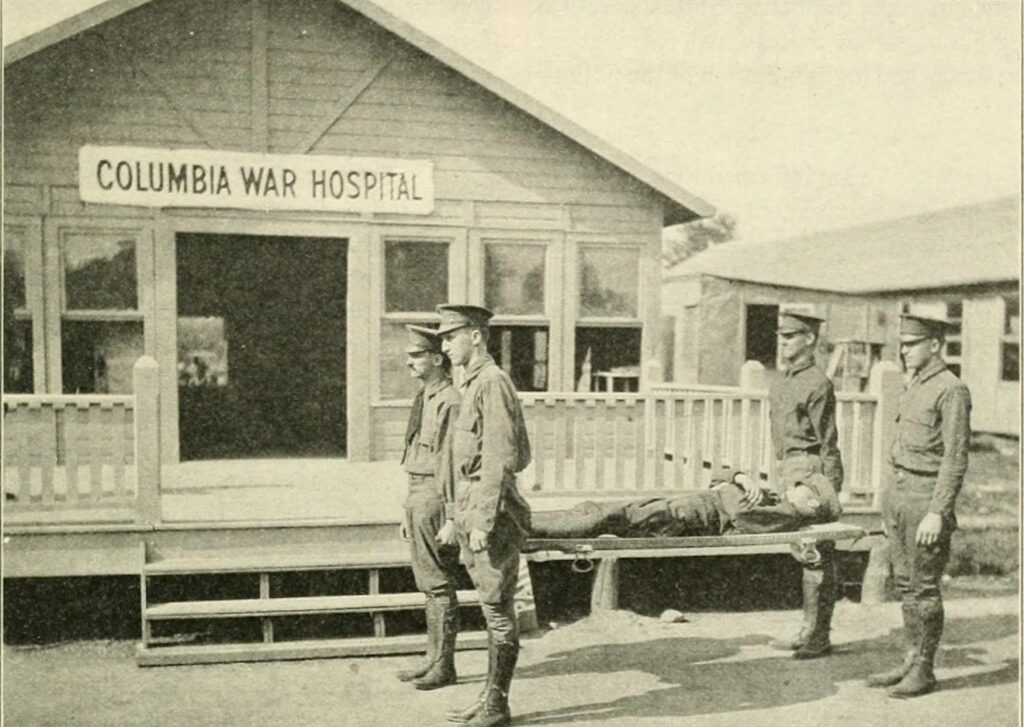
Equally important was U.S. Army General Hospital No. 1, also known as the Columbia War Hospital. Built by Columbia University at the Columbia Oval in the Norwood neighborhood, the medical complex was handed over to the U.S. Army in 1917.
Designed to accommodate over a thousand patients, it became one of the largest military medical facilities of its time. The hospital treated soldiers returning from the front lines with severe injuries and trained a new generation of military doctors and nurses. Because of this, the Bronx became not only a military training ground but also a focal point for the advancement of military medicine in the United States.
New York Industry: Bronx Shipyards Serve the Fleet
World War I gave a massive boost to the Bronx’s industrial sector. When the U.S. entered the war, local businesses secured large government contracts. Production quickly pivoted to meet the needs of the Army and Navy.
The shipbuilding industry played a particularly vital role. Shipyards that had previously built or repaired civilian vessels shifted their focus to the war effort, supplying the American fleet with new warships and auxiliary crafts.
A prime example was the Robert Jacob Shipyard on City Island. At the outbreak of the war, the company swiftly changed its operational focus. Civilian yachts were retrofitted into armed patrol boats used to guard the American coastline.
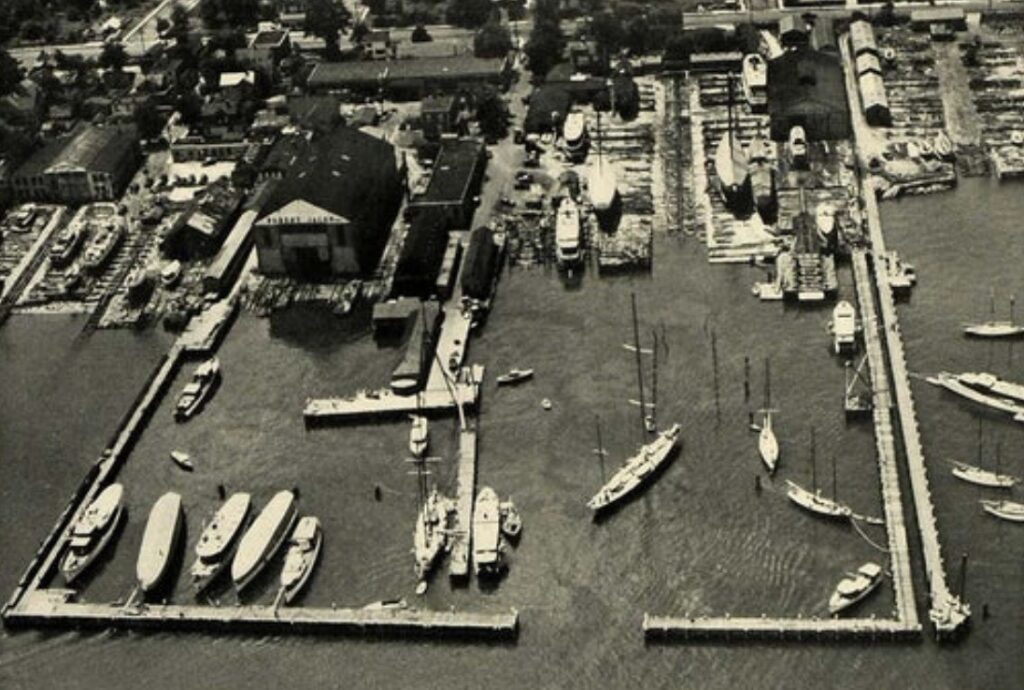
In 1917, the U.S. Navy requisitioned the private yacht Paragon. The shipyard converted it and commissioned it into the fleet under a new name, the Sybilla III. Afterward, the vessel was assigned to coastal defense duties.
However, refitting yachts was just part of the shipyard’s massive workload. Throughout 1917 and 1918, the facility built five 110-foot wooden submarine chasers: the SC-313, SC-314, SC-315, SC-316, and SC-317. These ships were later transferred to France, where they helped combat German U-boats.
In 1918, the shipyard fulfilled several other vital military contracts. They manufactured four specialized barges for servicing seaplanes, along with five harbor tugs that supported naval base operations and cargo transport.
National Tensions and Patriotism: How the War Changed Immigrant Life
In the early 20th century, New York was one of the most diverse cities in the world, and the Bronx was a true cultural mosaic. Germans, Irish, Italians, Jews, immigrants from the Russian Empire, and dozens of other nationalities lived side by side.
City officials feared that disputes between different ethnic communities could escalate into open conflict. To prevent this, New York City Mayor John Purroy Mitchel banned public demonstrations in support of foreign nations, viewing them as a threat to public order.
The atmosphere shifted dramatically after the U.S. entered World War I in April 1917. From then on, residents were expected not only to obey the law but to openly display their patriotism. This particularly affected immigrants, who found themselves under intense public scrutiny.
At the height of the war, the mayor captured the era’s sentiment with a harsh declaration:
“All citizens can be divided into two classes: Americans and traitors.”
This rhetoric placed immense pressure on foreign-born residents, essentially forcing them to constantly prove their loyalty to their new homeland.
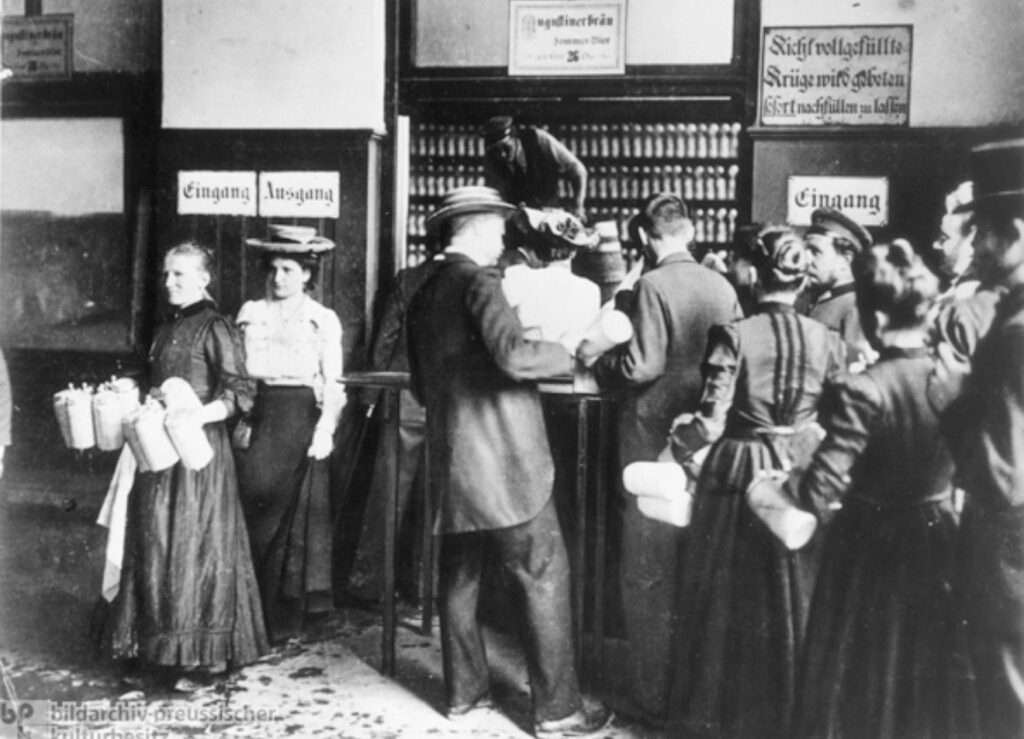
In the Bronx, as in the rest of New York City, campaigns were launched to collect signatures on declarations of loyalty to the United States. German-language newspapers, which had recently covered events from the perspective of their historic homeland, drastically changed their editorial policies and began publishing materials in support of the American military. Business owners also rushed to distance themselves from any German associations. Shops, restaurants, social clubs, and even certain institutions dropped their German names to avoid any suspicion of disloyalty.
For many immigrants, the war was more than an international conflict; it was a test of their own identity. They faced a difficult choice: preserve the historical memory of their country of origin or prove they belonged in American society.
World War I was a severe stress test for the Bronx, yet it also accelerated the borough’s modernization. The opening of military hospitals, massive shipbuilding contracts, and infrastructure development transformed the area from a suburban retreat into an integral, industrialized part of a global New York City. Despite ethnic tensions and economic hardships, local residents evolved from isolated immigrant enclaves into a united American community. This transformation laid a solid foundation for the continued growth of the Bronx during the Roaring Twenties.