
The Bronx has always been a staunchly Democratic borough. While there were certainly Republican supporters, for the past 40 years, representatives of the Democratic Party have consistently won in this New York borough. But after years of Democratic dominance in the Bronx, an unexpected event occurred: in the 2023 local elections, Republican Kristy Marmorato won. How did the Democrats start losing their position in the Bronx, and what’s behind the warming relationship between Republican Donald Trump and New York’s Democratic mayor? Read on at bronx-yes.com.
An Unexpected Election in the Bronx
The last time the Bronx had a Republican representative on the City Council was during Mayor Ed Koch’s administration. From 1977 to 1983, Joseph Savino Jr. served as an at-large council member—until the position was eliminated.
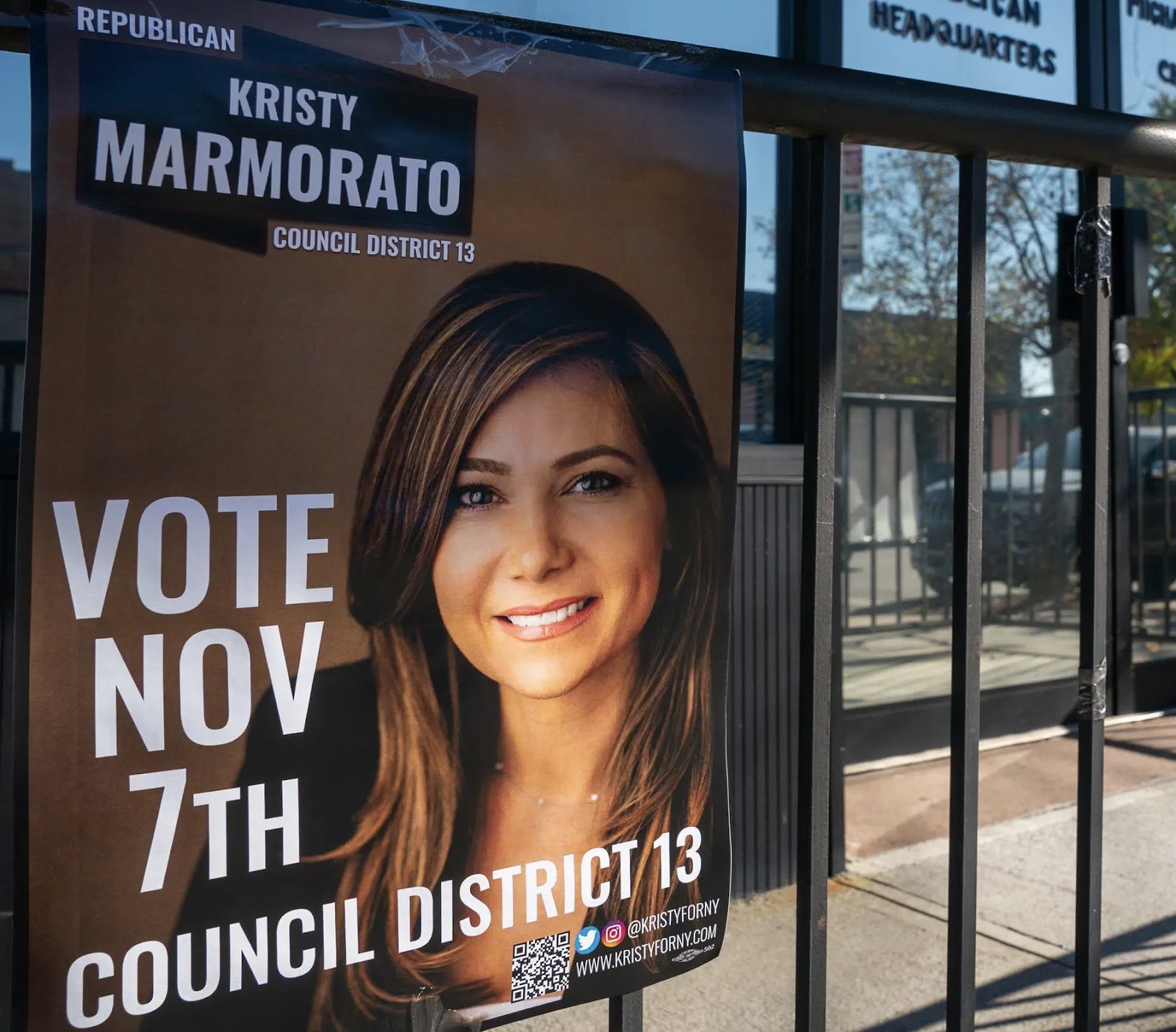
And now, after a long hiatus, Republicans are “back in the saddle.” Although Democrats won the New York City elections overall in 2023, the loss in the Bronx was an alarming signal. Republicans actively campaigned, focusing on issues of crime, immigration, and development, and they managed to mobilize voters.
Marmorato won by a narrow margin, but she won nonetheless. At the same time, Republicans didn’t achieve the same success in the rest of New York’s boroughs—in Brooklyn and the northern parts of the city, Democrats were victorious, especially in areas with large Asian American populations and in Erie County.
Republicans, however, made a significant breakthrough on Long Island, where they won a number of key positions. This has made Democrats nervous, as the results in these areas could determine the majority in the U.S. House of Representatives.
Kristy Marmorato, a radiologist by profession, emphasized that her candidacy was a response to the community’s desire to protect its neighborhood. She spoke out against dense development, called for more police officers, and argued that local residents felt like they had no control over what was happening in their area. These points resonated with the community. Many were tired of relying on Democratic promises and decided to give their opponents a chance. This once again underscores that in politics, as everywhere else, you must first and foremost be guided by the desires and needs of the people.
Some Democrats see the loss of this seat as a local anomaly, while others see it as an alarming sign. As one council member put it, it was a “perfect storm” that led to an unexpected Republican victory in a deeply Democratic district.
Why the Bronx Voted Republican
How did it happen that in a borough where Democrats outnumber Republicans ten to one, the election results turned out this way?
One of the key reasons was the situation surrounding the development of the Throgs Neck area, which covers the northeastern part of the Bronx, including the coastal neighborhoods along Long Island Sound and Eastchester Bay. Twenty years ago, development rules were changed here to allow for lower housing density, which contributed to the further suburbanization of the area. A cozy, quiet neighborhood with the telling name of “Country Club” emerged there.
Democrat Marjorie Velázquez, who had previously won with over two-thirds of the vote, lost support when she changed her position on the development issue. Initially, she sided with local residents against a plan to build several high-rises. But later, citing the housing crisis, she supported the project. After her support, the plan received unanimous approval from the City Council, but her constituents vehemently opposed it. Before the vote, they picketed Velázquez’s office, and trucks appeared in the streets with ads calling her the “Throgs Neck Traitor.”
The local group, the Bronx Coalition Against Upzoning, filed a lawsuit demanding that construction be stopped. Their main complaint was that the new buildings didn’t fit in with a neighborhood of mostly one- and two-story homes. But the court dismissed the suit—the area was not historically significant, and the buildings were planned to be no taller than eight stories.
This story played into the hands of Kristy Marmorato, who ran as a protest candidate. According to local official Matthew Cruz, the issue of land use here unites people regardless of political views. The neighborhood, he says, has become a “quiet refuge” for residents—even if they work in Manhattan, they want to live in a remote, peaceful place.
Marmorato was quick to realize the disconnect between the community’s position and the government’s actions and used it to her advantage.
Meanwhile, Mayor Eric Adams continued to push his “City of Yes” policy—including supporting development and the installation of cell towers. He openly criticized residents’ resistance to change in Throgs Neck, noting that only 58 units of affordable housing had been built there in the last decade. But residents were looking for support for their own position, and they found it in Kristy Marmorato.
Even more dissatisfaction among Bronx residents with the Democrats’ actions was caused by the idea of placing people released from Rikers Island prison in a former medical center.
Marjorie Velázquez left the party’s Progressive wing and tried to distance herself from more radical Democrats, but it didn’t help—voters didn’t forgive her decision to support the construction of affordable housing.
The Relationship Between the Republican President and the Democratic Mayor
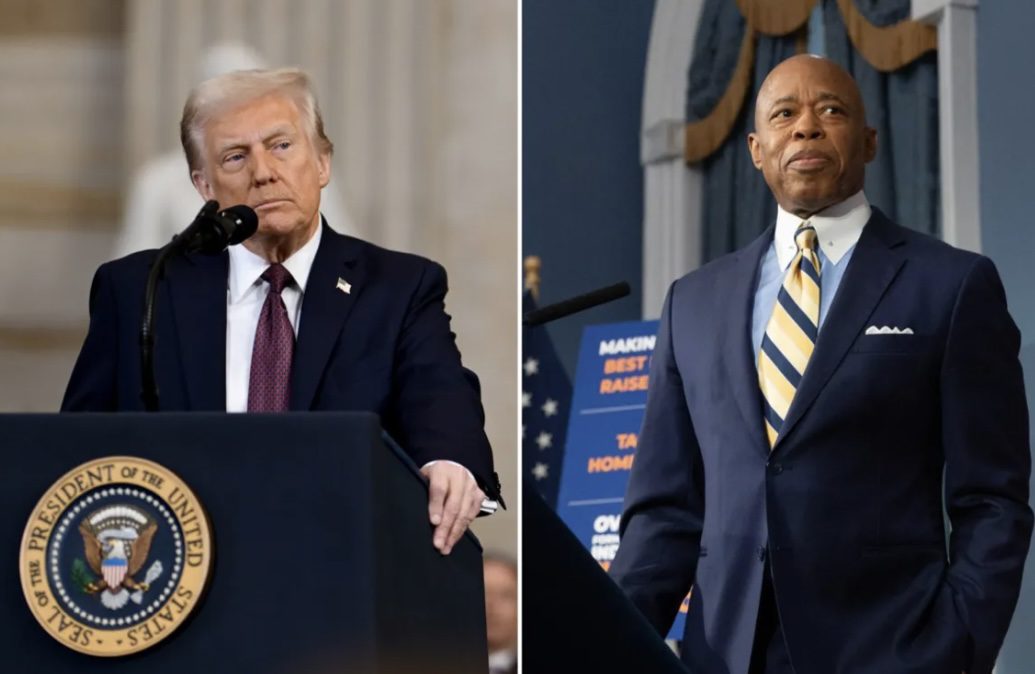
Some New York Republicans are puzzled by why Donald Trump is so positive toward New York’s mayor, Democrat Eric Adams. They believe the city has serious problems—rising crime, filth, and a flood of migrants—and they blame Adams for it. So they don’t understand why Trump is supporting him and can’t come to terms with the fact that their leader is favorably disposed toward a man who once called himself “the Biden of Brooklyn.” Trump even said he might pardon Adams, who is suspected of corruption, and called him a victim of political pressure.
Adams, for his part, also shows a willingness to cooperate with a Trump administration—specifically, he supports the idea of deporting migrants who have committed crimes.
Some Republicans believe the mayor is simply looking for political gain, but they don’t understand why Trump, for his part, is so actively meeting him halfway. Congresswoman Nicole Malliotakis reminded them that she had criticized Adams many times for his policies.
“Republicans have had to fight him on everything from shelters and sanctuary policies to bike lanes and speed cameras,” she said. “His values are not Republican Party values.”
Eric Adams’ Political Maneuvers
New York Mayor Eric Adams, although a Democrat, had recently given serious consideration to running in the Republican primary—according to Republican officials and people familiar with the situation. According to them, Adams consulted with Republican leaders in the Bronx and Manhattan about a possible party switch, running as an independent, or getting a Wilson Pakula certificate, which would allow him to run in another party’s primary without changing his party affiliation.
In the Bronx, Mayor Adams is losing support. Mr. Randino, a Bronx board chair, said his district is skeptical.
“Will they accept him? No, he’s a very hard sell,” he said. “How is he going to explain the 2,200-man migrant shelter that he’s shoving down our throat in the Bronx?”
Despite everything, Adams’ team has officially denied his plans to run as a Republican—the mayor stated that he remains a Democrat and is preparing for a campaign within that party.
The reason for this flexibility is Adams’ weakening position within his own party. His approval rating among Democrats has dropped significantly, and his support in the primaries is minimal. This makes his path to re-election uncertain.
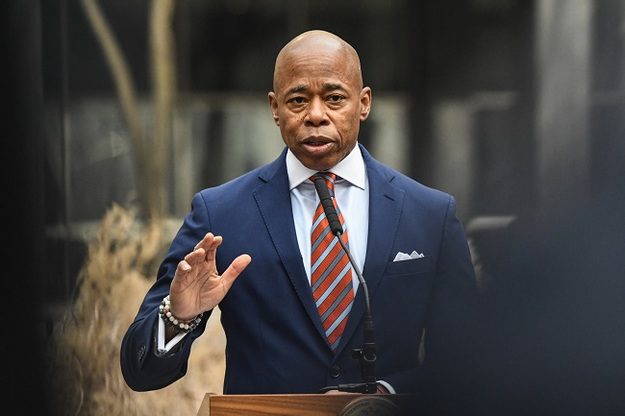
Amid these events, resistance has emerged within the Republican community. Many do not trust Adams because of his political past and his actions in office, particularly concerning immigration policy. At the same time, there remains a chance that the situation could change if Donald Trump personally intervenes and calls on party leaders to support Adams. In that case, getting a Wilson Pakula certificate would become a real possibility. Although the chances of Adams switching to the Republican ranks are slim, the very fact of these negotiations indicates his unstable political position and his search for unconventional ways to hold onto power.