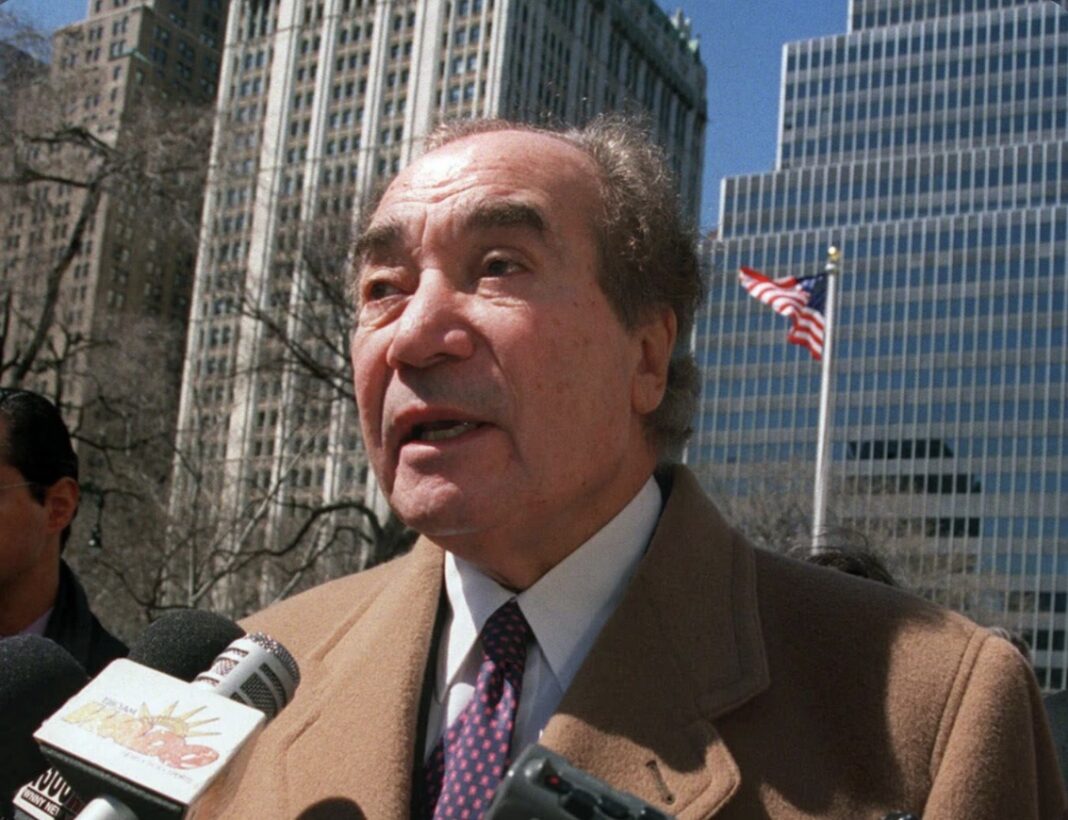

The story of Herman Badillo is a definitive example of a political breakthrough and a lifelong fight for the voices that often go unheard. In this article on bronx-yes.com we explore how this trailblazing politician turned his personal journey into a powerful tool for change, forcing a national conversation on poverty, inequality, and the realities of urban life.
Survival, Education, and Achievement
Herman Badillo was born on August 21, 1929, in Caguas, Puerto Rico. His father was a public school teacher and his mother was a devoted community volunteer. At age eleven, Badillo’s world was upended when a tuberculosis epidemic claimed both of his parents. His aunt brought him to New York City, marking the beginning of a youth defined by transience and hardship, including short stints in Chicago and California. Eventually, he returned to New York, where he graduated from high school with honors, overcoming the systemic ethnic discrimination prevalent in the schools of that era.
Badillo enrolled in the City College of New York (CCNY), earning a bachelor’s degree in Business Administration in 1951. By 1954, he graduated from Brooklyn Law School, finishing first in his class, and was admitted to the New York State Bar the following year. A man of many talents, he also became a Certified Public Accountant (CPA) in 1956 and briefly practiced in the field.
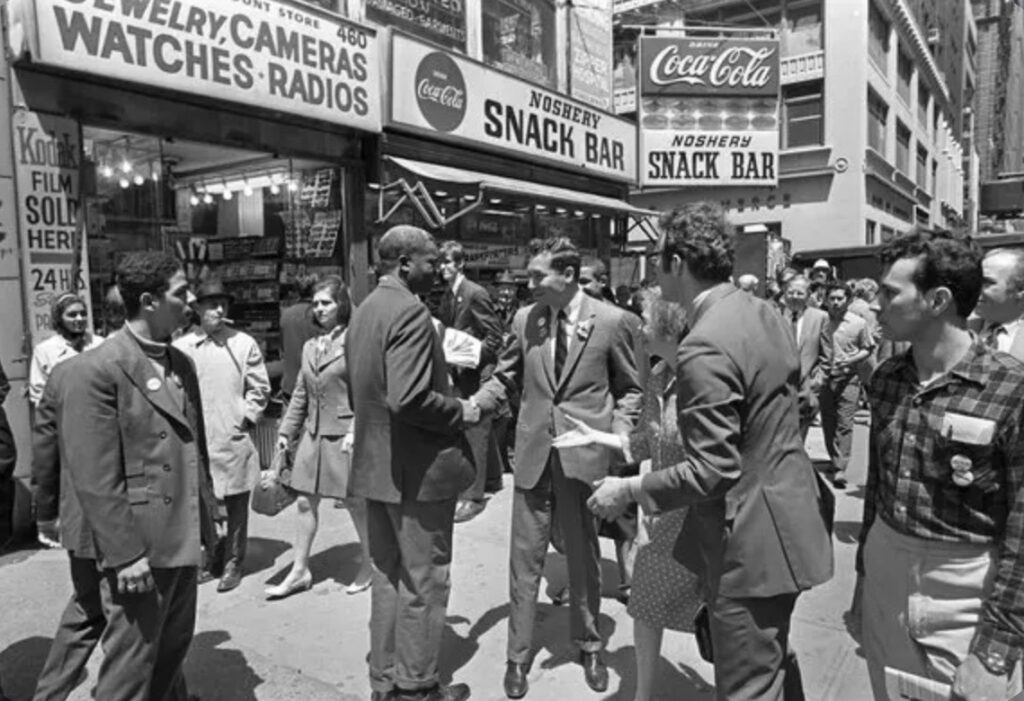
His political ascent began in 1958 when he joined the Caribe Democratic Club. In 1962, he was appointed Commissioner of the NYC Department of Housing and Relocation, becoming the highest-ranking Latino official in the city’s history at the time. In 1966, Badillo took office as the Bronx Borough President, where he faced significant challenges, including the fate of the historic Bronx Borough Hall, which was partially destroyed by fire in 1968.
The Voice of the Immigrant in Congress
In 1970, Herman Badillo made history as the first Puerto Rican elected to the U.S. House of Representatives, representing New York’s 21st District in the South Bronx. His victory with 84% of the vote opened the door for three consecutive terms in Congress, where he immediately established himself as a fearless advocate for his constituents.
“I represent the primary immigrant,” Badillo often stated. “Everyone says their parents or grandparents came here, couldn’t speak English, and were poor. In my case, it wasn’t my parents or grandparents. It was me.”
In the House, Badillo served on the Committee on Education and Labor, where he focused on legislation for a district where nearly half the residents were non-English speakers. Thanks to his efforts, job training programs for the non-English-speaking unemployed were included in the Comprehensive Employment and Training Act of 1973. He was a staunch supporter of community development, expanded educational opportunities, and tax credits for students. He also championed legislation against discrimination based on age and marital status.
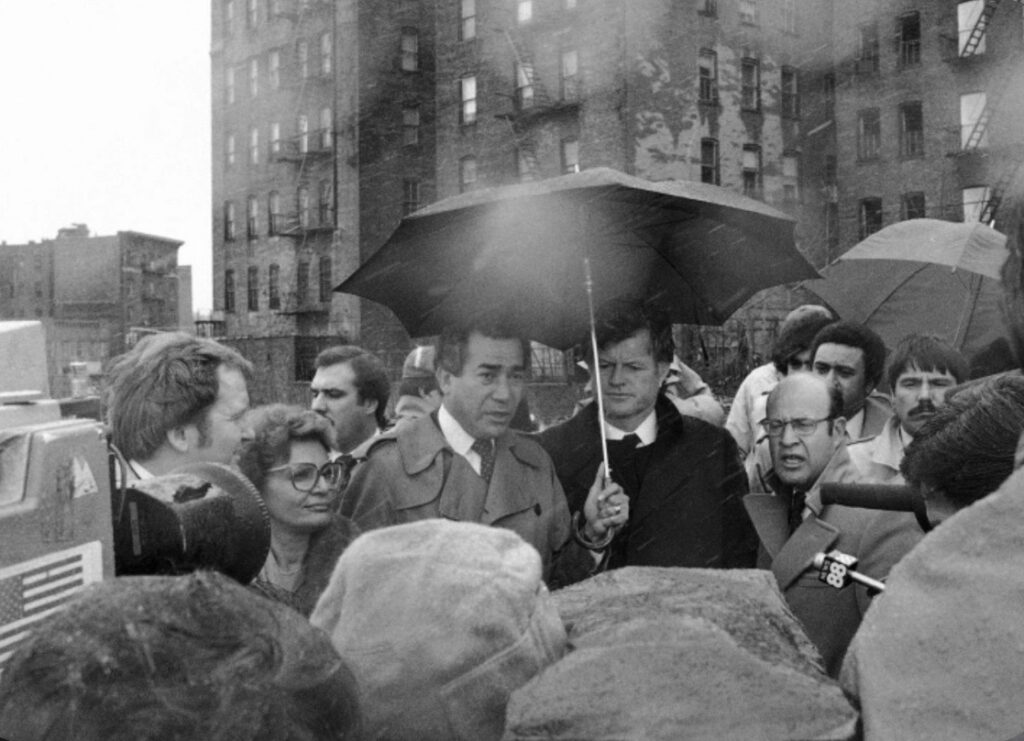
Badillo became a pivotal figure in the fight for federal funding for bilingual education. As a congressman, he always kept his finger on the pulse of the community. He challenged young Puerto Ricans to see the broader social picture, encouraged cross-ethnic coalition building, and personally intervened in matters of housing, employment, and education. His floor speeches were filled with resolve—ranging from fiscal aid for cities and states to school busing integration, and from prisoner rights to Social Security reform.
Throughout his tenure in Congress, Badillo remained the “Voice of the South Bronx,” seamlessly blending innovative policy ideas with practical actions that changed the lives of his voters every single day.
Badillo’s Political Ambition: Five Runs for City Hall
Herman Badillo’s quest to lead New York City spanned nearly two decades, with mayoral bids in 1969, 1973, 1977, 1981, and 1985. His most significant breakthrough came during the 1973 primary, where he secured second place with 29% of the vote, narrowly losing to Abraham Beame, who took 34%.
On December 31, 1977, Badillo made a high-stakes move: he resigned from Congress to serve as Deputy Mayor of New York City, a post he held until September 1979. He was one of seven deputy mayors appointed by Ed Koch during the administration’s early days, working alongside figures like Basil Paterson. His portfolio focused on labor relations and community outreach to bolster the Mayor’s legislative agenda.
However, the alliance with Koch was short-lived. Friction over a lack of support for South Bronx revitalization initiatives forced Badillo to step down. At the time, critics argued he had made a strategic blunder by trading a powerful seat in D.C. for a municipal role.
Despite his mayoral setbacks, Badillo remained a “heavyweight” on the national stage. He coasted to re-election in the 94th and 95th Congresses, often without any real opposition, securing staggering landslides with over 97% of the vote. His approach was a masterclass in combining legislative policy with boots-on-the-ground action: he fought for job creation, community development, comprehensive childcare, and federal aid for a struggling New York City.
Between Power and the Shadows
After stepping away from frontline politics, Herman Badillo didn’t disappear; he simply shifted his influence. He returned to his law practice but remained a “gray eminence” in city and state political circles, where his experience and endorsement still carried immense weight.
In the early 1980s, Badillo made waves by backing Mario Cuomo for Governor against the powerful Ed Koch. That loyalty paid off: in late 1983, Cuomo tapped him to lead the State of New York Mortgage Agency—a role that demanded not just political savvy but a gridiron grip on economic policy.
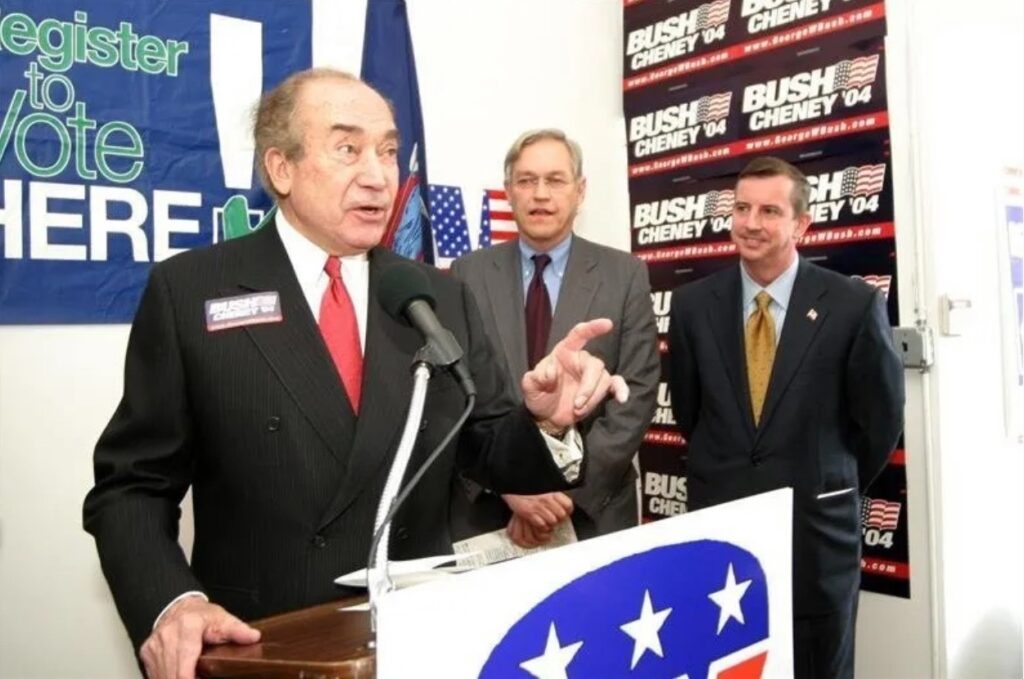
The 1990s brought an unexpected ideological shift. In 1993, while still officially a Democrat, Badillo forged a bold and risky alliance with Republican Rudy Giuliani in a bid for New York City Comptroller. The maneuver backfired; he lost the election to Alan Hevesi and found himself caught between two political camps, fully trusted by neither.
This period sparked intense debate over Badillo’s political identity. Nevertheless, he remained a key figure in the Giuliani administration, serving as a special advisor on education and chairing the Board of Trustees for the City University of New York (CUNY). Eventually, Badillo’s political evolution culminated in a final break with the Democratic Party.
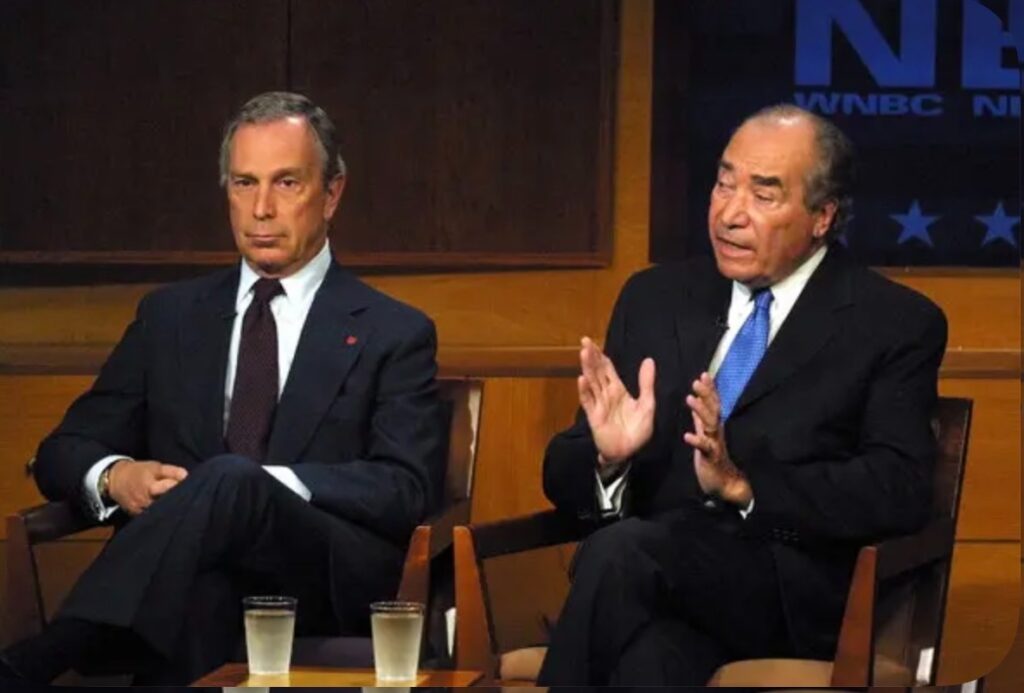
He spent his final years away from the ballot box but never away from the conversation. He practiced law, contributed to think tanks like the Manhattan Institute, and remained a voice with a unique—and often controversial—conviction.
Herman Badillo passed away on December 3, 2014, in Manhattan. His legacy remains a complex tapestry. While he achieved historic milestones, some of his initiatives—like creating enterprise zones in the Bronx—later faced criticism for failing to deliver results for the poorest residents. Yet, that was the essence of Badillo: a man willing to take the gamble, even when the true cost of the wager would only be revealed years later.