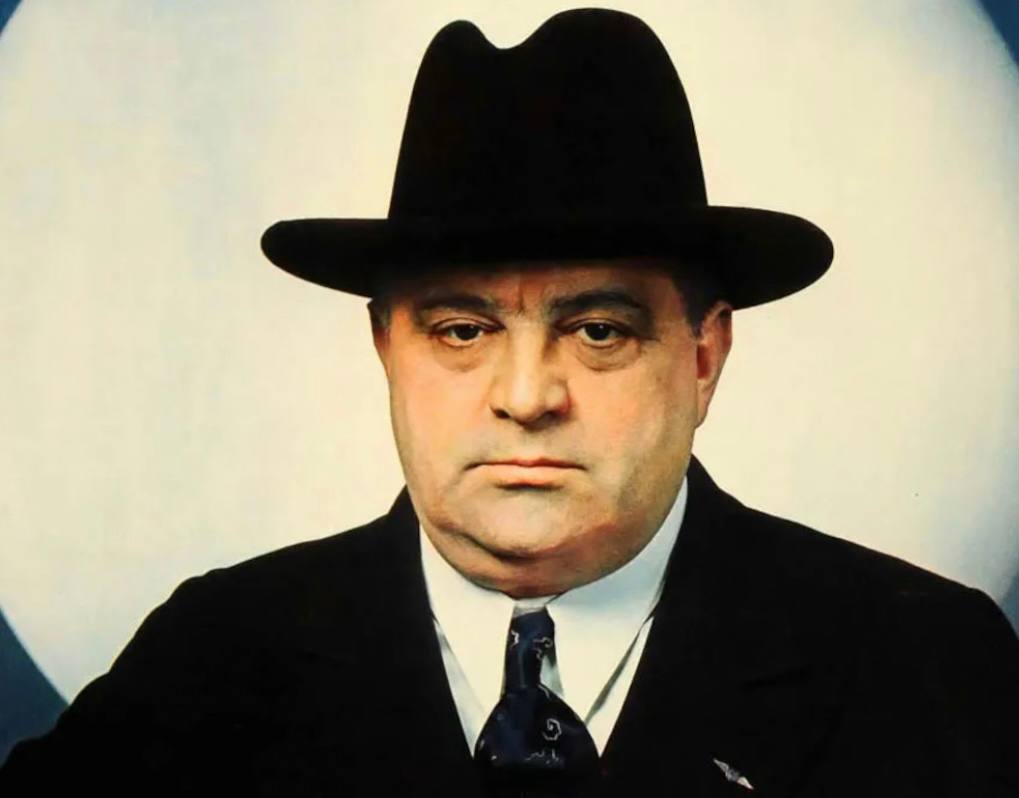

Fiorello LaGuardia was an American lawyer and politician who represented New York in Congress and served as the city’s 99th mayor from 1934 to 1946. He’s remembered as a spirited, energetic, and charismatic leader, short in stature but stout in build. As a progressive reformer, he steered the city through the challenging times of the Great Depression and World War II. LaGuardia became the first New York City mayor to serve three terms and the first of Italian descent. Discover more about this influential political figure at bronx-yes.com.
Family and Early Life
This politician is known for his intriguing background. His father, Achille Luigi Carlo LaGuardia, was born in 1849 in Foggia, then part of the Kingdom of the Two Sicilies. His grandfather, Don Raffaele, was a municipal official. Some sources even suggest Raffaele might have participated in Giuseppe Garibaldi’s liberation campaigns.
In 1878, Achille, a musician, toured with the famous opera singer Adelina Patti. While in Trieste, then part of Austria-Hungary, he met Irene Luzzatto-Coen at a dance. Her mother, Fiorina, was a distant relative of Italian Prime Minister Luigi Luzzatti.
On June 3, 1880, Achille and Irene married in Trieste. Afterward, the couple immigrated to the United States. On December 11, 1882, their son was born in the Bronx. His full birth name was Fiorello Raffaele Enrico LaGuardia: Fiorello—after his maternal grandmother, Raffaele—after his paternal grandfather, and Enrico—after his uncle. Later, his second name was dropped, and the third was Americanized to Henry.
In 1885, Achille joined the U.S. Army, becoming a warrant officer and chief musician for the 11th Infantry Regiment. The family moved frequently, living on military bases in Dakota, New York, and Arizona. In Prescott, young Fiorello was baptized into the Episcopal Church and remained faithful to this denomination throughout his life. His father forbade the children from speaking Italian; Fiorello only mastered it as an adult while working in diplomacy.
At the start of the Spanish-American War in 1898, Fiorello tried to enlist but was too young. Instead, he became a war correspondent for the “St. Louis Post-Dispatch.” During this time, Achille fell severely ill, contracting hepatitis and malaria from embalmed beef. Due to his illness, he was discharged from the army, and the family moved to Trieste, settling with Irene’s mother, Fiorina. They lived there until her death in 1901. Achille took odd jobs as a truck driver, ship supplier, and hotel manager. On October 21, 1904, Achille passed away.
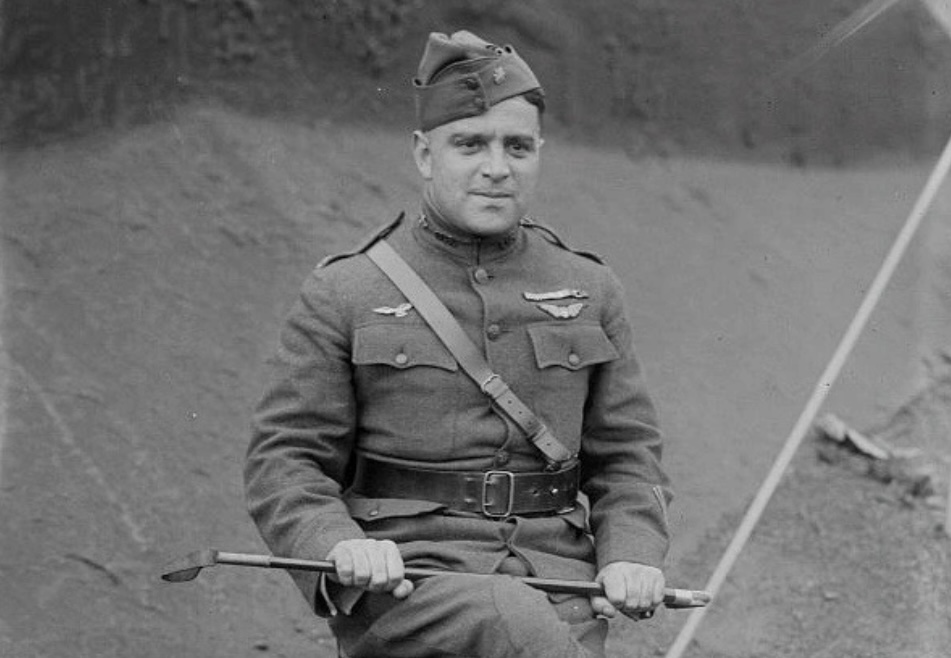
Fiorello worked as a clerk in U.S. diplomatic missions—first in Budapest, then in Fiume. It was during this service that he finally learned Italian.
In 1906, LaGuardia returned to New York. There, he worked as an interpreter on Ellis Island, assisting immigrants, and later became an immigration and labor lawyer, which set the course for his future political career.
A Rocky Climb Up the Political Ladder
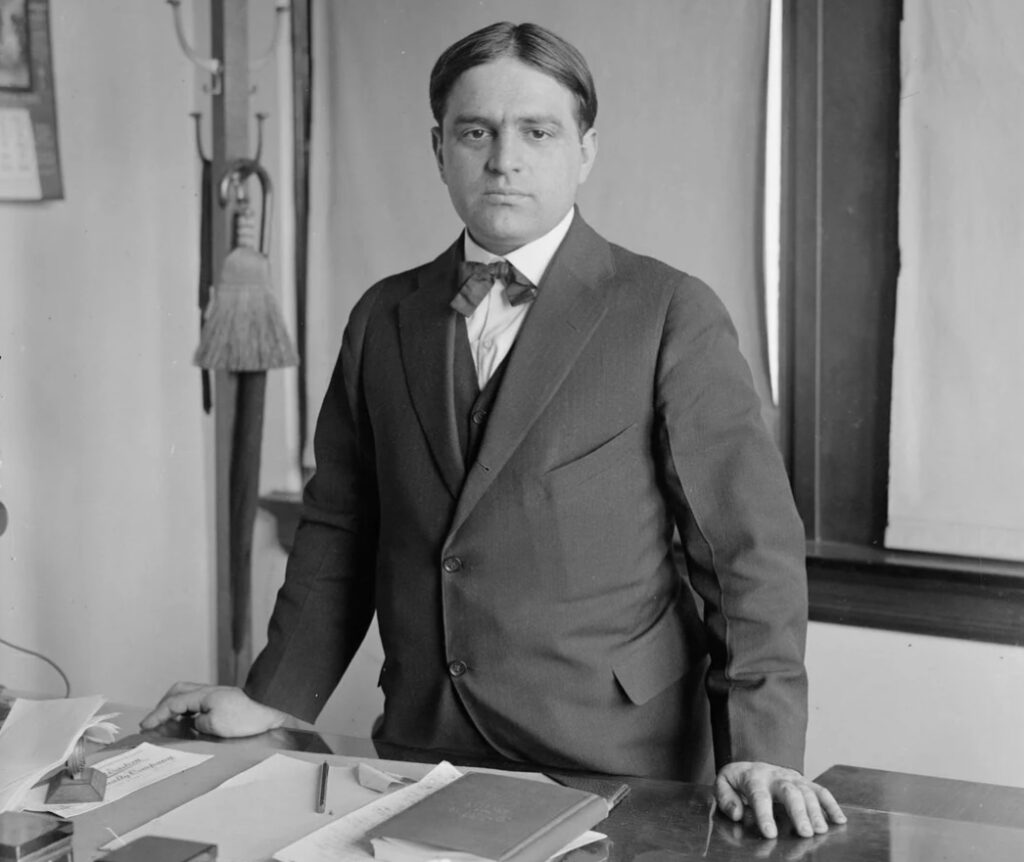
Though Fiorello LaGuardia wasn’t a typical New Yorker, his diverse background and experience proved to be valuable assets when he entered politics. LaGuardia spoke several languages—Italian, German, French, Hungarian, Croatian, and even Yiddish. During an election campaign, when accused of anti-Semitism, he challenged his opponent to a debate in Yiddish—a language he spoke better than the Jewish candidate himself.
His own family tragedy instilled in him empathy for the underprivileged: his first wife and daughter died of tuberculosis, which they contracted while the family lived in what was then the working-class neighborhood of Greenwich Village.
In 1916, LaGuardia was elected to the House of Representatives from Lower Manhattan. His personal experiences, progressive convictions, and deep understanding of immigrant life made him a natural ally for liberals and reformers. In Congress, he consistently opposed immigration restrictions, supported labor rights, and even called for the nationalization of the coal industry.
Beyond his congressional career, LaGuardia also served two years as President of the New York City Board of Aldermen, which gave him a unique understanding of both federal and local governance—experience that would prove invaluable later on.
As Mayor of New York City
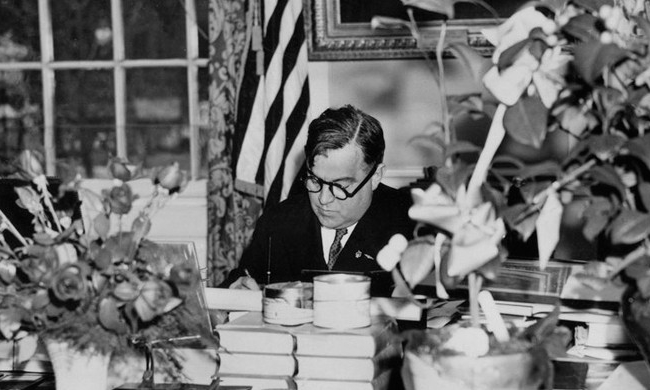
In 1933, Fiorello LaGuardia unexpectedly won the election for Mayor of New York City. This was partly due to a deep crisis within the city’s Democratic Party: a power struggle between the corrupt Tammany Hall machine and Roosevelt’s progressive supporters. And while Fiorello only garnered 40% of the vote, it was enough because his opponents split the remainder.
With Roosevelt’s support and the “New Deal” programs, LaGuardia quickly established cooperation with Washington. Federal investments in New York City’s infrastructure reached record levels: thanks to the New Deal, the city received funds for building roads, subways, bridges, tunnels, schools, parks, and markets. Before this, cities had limited ties to the federal government, but thanks to LaGuardia, New York became a prime example of urban renewal.
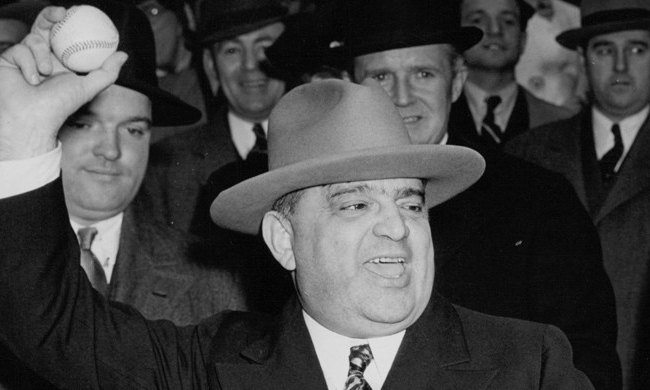
Among Fiorello LaGuardia’s Main Achievements as Mayor:
- Unified Transportation System: LaGuardia integrated the independent city subway line with two private systems, creating a single public transit network. Lines A, B, C, D, E, F, and G were built, extending subway access to the Bronx, Brooklyn, and Queens.
- Large-Scale Transportation Projects: Under his leadership, the Triborough Bridge, the Queens-Midtown and Brooklyn-Battery Tunnels, and the Belt Parkway, Henry Hudson Parkway, and East River Drive expressways were completed.
- Implementation of Several Housing Projects: First Houses—the first redevelopment project; Williamsburg Houses—for white families; Harlem River Houses—for African Americans; Queensbridge Houses—over 3,100 apartments, the largest housing complex in North America.
- Urban Infrastructure Renewal: Over 200 playgrounds, zoos, beaches (Jacob Riis, Orchard Beach), and large swimming pools (Astoria, Crotona, McCarren, etc.) were created.
- Changes in Healthcare and Social Services: 15 district health centers were opened, providing access to modern medicine for working-class families. The 1944 HIP program introduced a non-profit health insurance plan for city workers, with the mayor’s office covering 50% of the cost.
- Facilitating the Opening of the City Center of Music and Drama: A cultural platform was created for theatrical, ballet, symphony, and opera performances.
- Support for Labor Unions: LaGuardia aimed to make New York a “100% union city.” A board was established to recognize unions and resolve labor disputes.
When running for mayor, Fiorello LaGuardia declared, “I want justice on the widest scale… justice that gives everyone a chance at beauty and the better things in life.”
His mayoralty became an example of how socialist-leaning leadership could effectively modernize a city: not only in infrastructure but also in social services and healthcare. All of this made LaGuardia a symbol of good governance in times of crisis and an example of reformist politics in action.
Legacy and Interesting Facts
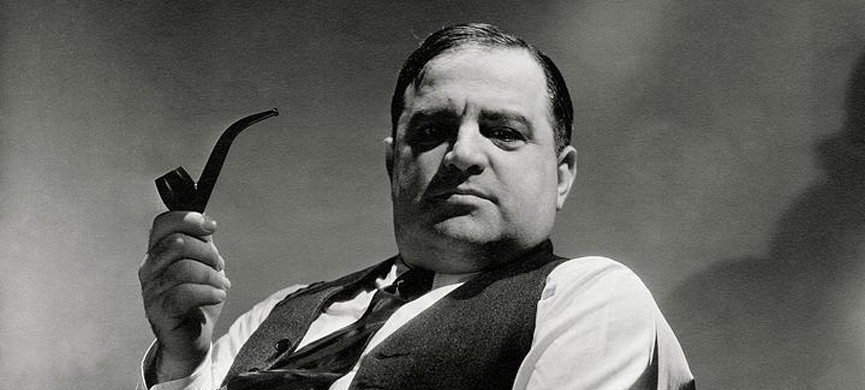
Since Fiorello LaGuardia was only five feet tall, and his name means “little flower” in Italian, he was called “the Little Flower” throughout his life.
In 1993, a group of 69 scholars recognized Fiorello LaGuardia as the best mayor of a major city in American history.
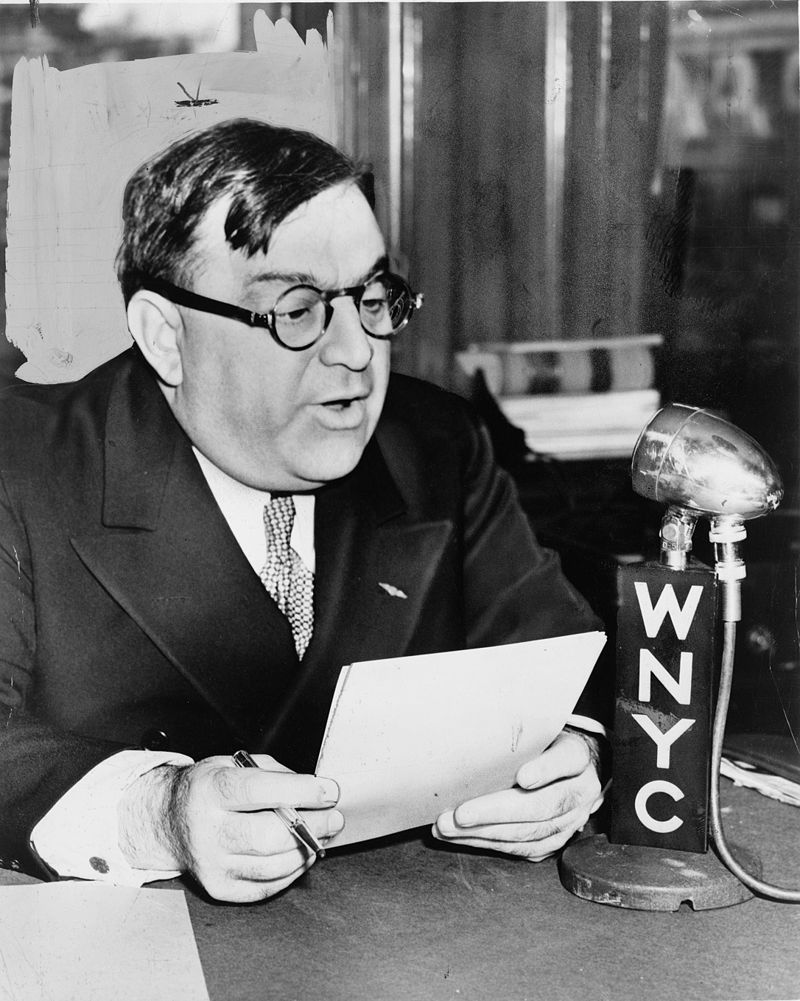
Fiorello LaGuardia’s radio show, “Talk to the People” on WNYC, which aired from December 1941 to December 1945, helped him gain influence beyond New York. During a newspaper strike in the 1940s, LaGuardia responded to public outrage by stepping up to the microphone and personally reading comic strips from Sunday editions to children. He vividly retold the stories, mimicking characters’ speech and accents. This endeared him to voters and young listeners across the city and boosted his popularity nationwide.
A monument to Fiorello LaGuardia was unveiled on October 19, 1994, at 547 LaGuardia Place. It was created by sculptor Neil Estern.
The first municipal airport in Queens, converted from Glenn Curtiss’s former private airfield, is named LaGuardia Airport.
LaGuardia considered the High School of Music & Art, opened in 1936, one of his most important achievements. It later became part of a combined arts school whose alumni include Robert De Niro, Al Pacino, Jennifer Aniston, Timothée Chalamet, and others.