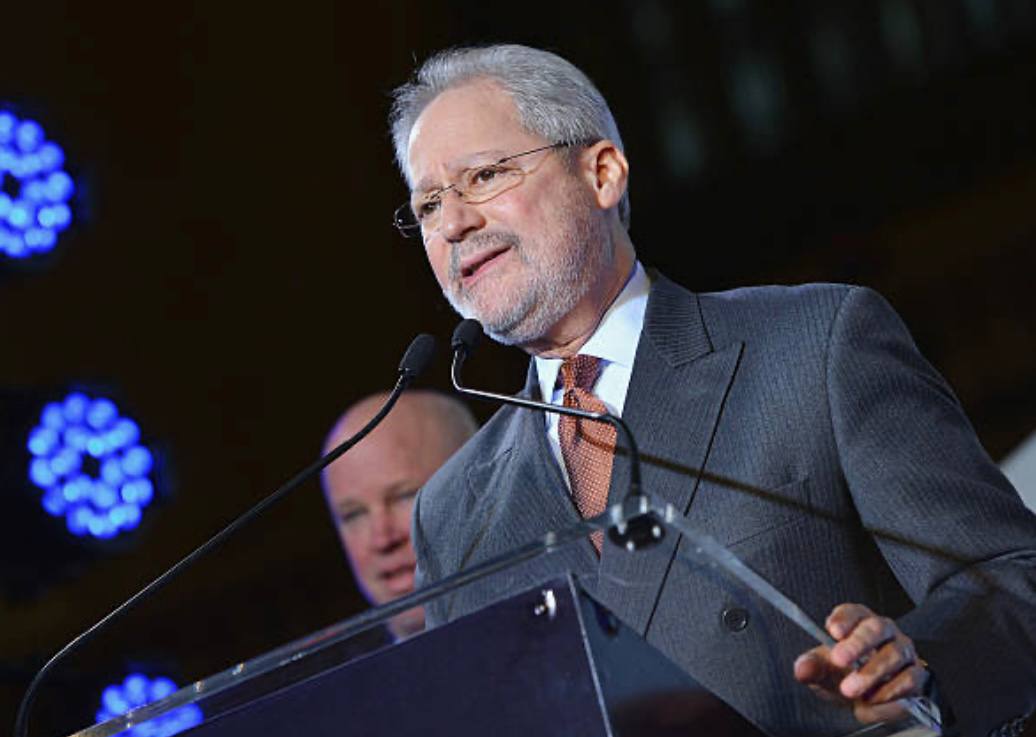

Fernando Ferrer left a significant mark on New York City’s history as a leader who helped transform the Bronx from a borough of blight into a place of hope and investment. He made a lasting impact not only as a politician but also as a statesman who continued to serve the community in new roles. His work in transportation, finance, urban planning, and non-profit initiatives demonstrates a deep commitment to fairness and transparency. Read on for more details about this ambitious Puerto Rican leader at bronx-yes.com.
Early Life and Education
Fernando James Ferrer was born on April 30, 1950, in the Bronx, to a family of Puerto Rican descent. His father worked as a security guard, his mother as a seamstress, and he was primarily raised by his grandmother, Inocencia. The family first lived in Morrisania and later in Longwood, in the South Bronx—a part of the city suffering from neglect, poverty, and social problems at the time. According to Ferrer, these conditions shaped his sensitivity to the issues faced by underserved communities. Despite their modest financial situation, his family particularly emphasized the importance of education. Fernando received his elementary education at St. Anselm’s Catholic School and his high school education at the prestigious Cardinal Spellman High School in the Bronx. Even in his youth, he showed an interest in public affairs and politics.
Fernando earned his bachelor of arts degree in political science from New York University’s University Heights campus. He later continued his education at Baruch College, a leading institution in public administration, where he earned a master’s degree in public administration.
As Bronx Borough President
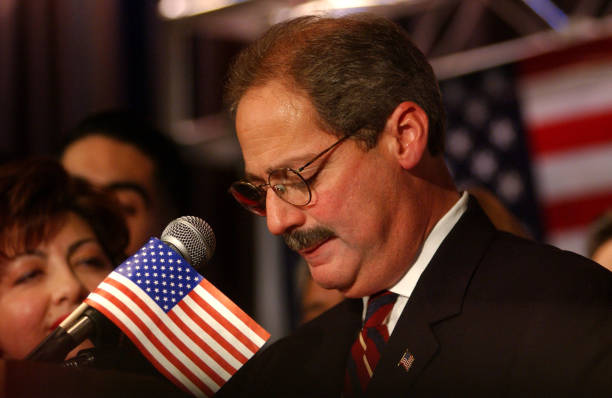
In 1987, following the resignation of Bronx Borough President Stanley Simon due to the Wedtech corruption scandal, Fernando Ferrer was appointed to the position. During his 14 years in office, Ferrer initiated a massive housing construction program—approximately 66,000 units of affordable housing were built in the Bronx, making it the largest urban housing revitalization project in the U.S. at the time. This brought thousands of residents back to the borough, fostered small business development, and revitalized entire neighborhoods. Simultaneously, the Bronx gradually shed its image as a place of ruin and began to be seen as a place of new opportunities.
During Ferrer’s presidency, there was also a noticeable decrease in crime rates in the South Bronx. This success was driven not only by law enforcement policies but also by social initiatives—investments in education, youth recreation, and improved housing conditions.
Cyclists also remember President Ferrer with gratitude. In 1993, Ferrer unveiled a bicycle infrastructure plan that envisioned creating 85 miles of routes connecting parks, residential areas, and public spaces.
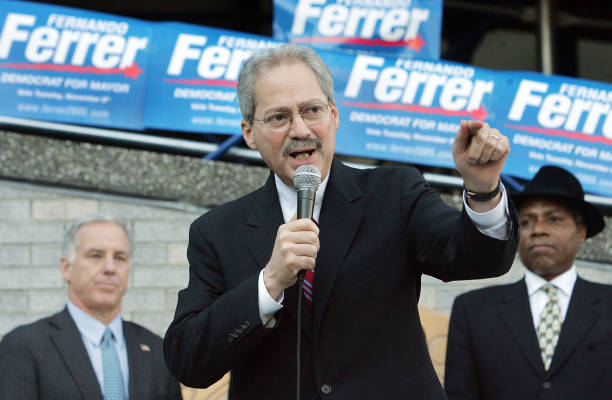
In 1994, at Ferrer’s initiative, the first “Tour de Bronx” bike ride took place, which later became the largest free bike marathon in New York State.
Additionally, Ferrer actively supported the restoration of historical sites. Notably, under his leadership, the historic auditorium at the Bronx Community College campus, damaged during the 1970s riots, was restored.
As a politician, Ferrer advocated for anti-discrimination legislation, particularly concerning the LGBT community, supported the creation of the Civilian Complaint Review Board, and spoke out against racial profiling. He also supported increased teacher salaries and expanded after-school programs for children from low-income families.
Despite his significant achievements, Fernando Ferrer faced criticism, notably for accepting financial support from real estate lobbying organizations like the Rent Stabilization Association. Concerns were also raised about his support for a requirement that tenants pay a deposit before their cases could be heard in housing court, which, according to civil rights advocates, could limit the rights of the most vulnerable residents.
Attempts to Become Mayor of New York City
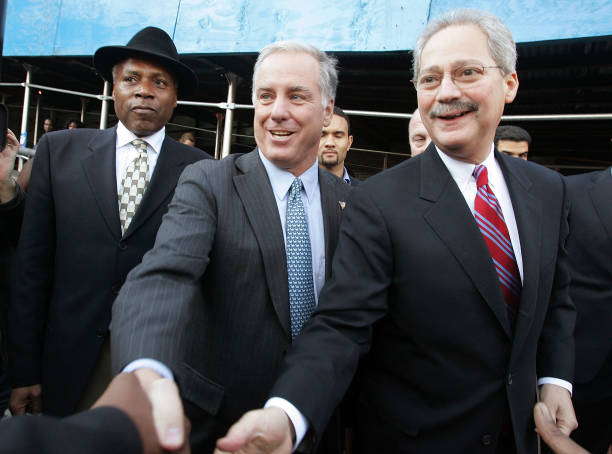
Fernando Ferrer’s Campaigns for New York City Mayor:
1997 — First Attempt
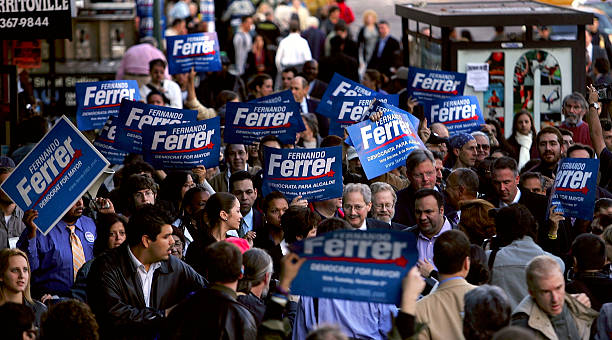
In 1997, Fernando Ferrer launched his first campaign for New York City Mayor. Despite initial enthusiasm, he failed to gain enough support in the polls. Amid pressure from the Democratic Party leadership, which sought to avoid a split, Ferrer unexpectedly withdrew his candidacy in favor of Ruth Messinger—Manhattan Borough President and the primary’s leading contender. Thus, his first attempt concluded with a compromise and a political gesture of unity.
2001 — Second Attempt
In the 2001 election, Ferrer returned to the mayoral race as one of the frontrunners. He managed to win the first round of the Democratic primary, securing 34% of the vote. However, this was not enough for automatic nomination—40% was required. In the runoff, he competed against Mark Green. The campaign took place during a particularly difficult period—after the terrorist attacks of September 11, 2001. These events shifted public focus and disrupted the course of the election. Ferrer had strong support among Latino voters but failed to secure sufficient support from the African American community, which proved to be a key factor in his defeat. As a result, he lost the primary to Green, who, in turn, lost the general election to Mike Bloomberg.
2005 — Third Attempt
As they say, “third time’s the charm.” So, in 2005, Ferrer decided once again to enter the race for New York City Mayor. He became the official Democratic Party candidate. Perhaps this attempt would finally have ended in a long-awaited victory, but Ferrer made a careless mistake. In politics, one must pay close attention to every word. This proved to be his undoing. One of the blows to his image was a controversial statement Ferrer made before the NYPD Sergeants Benevolent Association. He called the incident involving the death of Amadou Diallo—an unarmed immigrant shot by police in 1999—”a tragedy, but not a crime.” These words, despite his previous participation in protests and even arrest during them, provoked anger from the Diallo family and sharp criticism from activists, especially in the African American community.
Despite this, Ferrer managed to win the primary on September 13, 2005. However, in the runoff, his campaign suffered from a lack of funding. The overwhelming majority of his contributions came from small donations, while Ferrer’s opponent, incumbent Mayor Michael Bloomberg, invested tens of millions of his own funds (a total of $96 million). Most leading media outlets, including “The New York Times,” also endorsed Bloomberg, further solidifying his position. On Election Day, he lost with 39% of the vote against Bloomberg’s 58.4%.
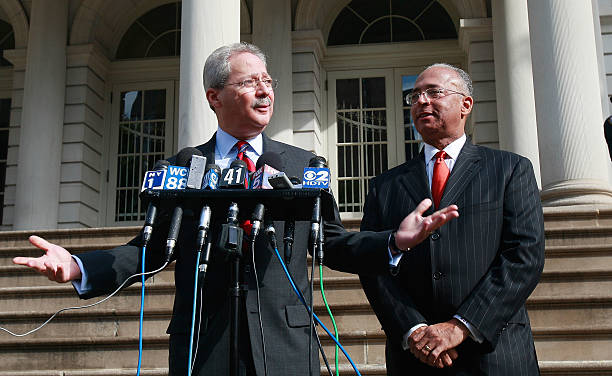
Fernando Ferrer’s campaigns became landmark moments in New York City history. As the first serious Latino mayoral contender, he symbolized the growing political influence of the Puerto Rican community.
Chairman of the MTA and Other Achievements
Beyond politics, Fernando Ferrer actively developed in the financial and non-profit sectors. His achievements include:
- Serving on the boards of several key institutions: Sterling Bancorp, Sterling National Bank, and the Regional Plan Association;
- Leading the Drum Major Institute for Public Policy;
- Serving as a board member for the Campaign for Fiscal Equity;
- Chairing the board of directors for the Banana Kelly Community Improvement Association, which focuses on housing and social development in the South Bronx;
- Receiving honorary degrees from Manhattan College, Mercy College, Herbert H. Lehman College, and Metropolitan College;
- Receiving the Eugene J. Keogh Award for Distinguished Public Service from the New York University Alumni Association;
- Receiving hundreds of accolades from educational, religious, and civic organizations.
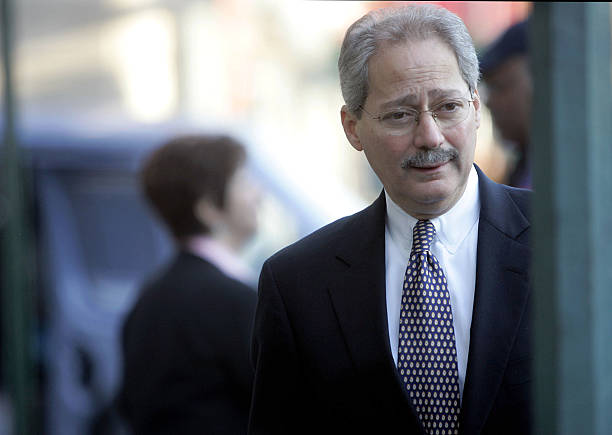
But Fernando Ferrer’s name is most often associated with the Metropolitan Transportation Authority (MTA) of New York. He joined the MTA board of directors in 2011 at the recommendation of Governor Andrew Cuomo. Over the next decade, Ferrer served as acting chairman of the agency three times during transition periods (2013, 2017, 2018-2019).
Ferrer played a key role in stabilizing MTA leadership during challenging times. His managerial experience and understanding of urban realities allowed the agency to continue operating smoothly. He was an active advocate for transportation accessibility and for incorporating the needs of all urban communities in decision-making processes.
Fernando Ferrer repeatedly emphasized that for him, public service was not a path to wealth or power, but a way to do good for society. He said:
“Being acting chair of the MTA doesn’t enrich you, it doesn’t put more money in your pocket, it doesn’t give you more power. You don’t even get a free MetroCard, for crying out loud. But all you do, and that should be enough, is the feeling that you served, that you did some good things. If you have a few public service genes in your DNA, they don’t disappear. Public service has always given me great pleasure. If you can do good things and help some people, that’s wonderful.”
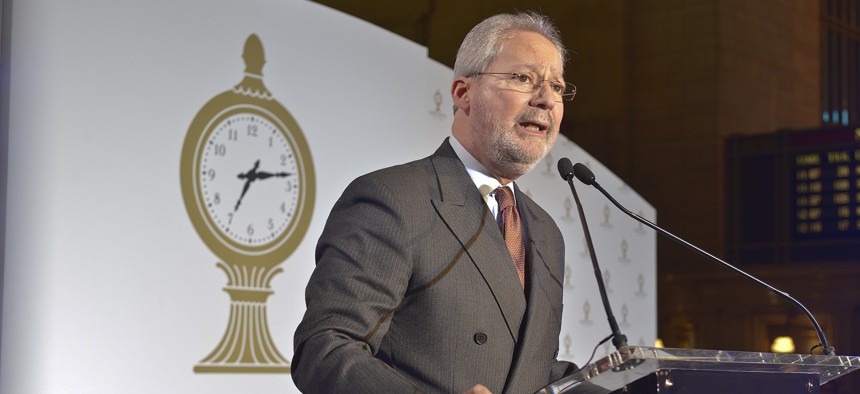
After concluding his active political career, Fernando Ferrer continued his work in public policy and community development. He became a co-chairman and partner at Mercury, a company specializing in strategic communications and lobbying. “`