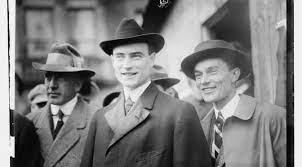

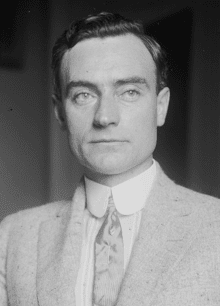
People enter politics for various reasons: some because they have achieved everything in their professional lives, others for fame and popularity, and some because they see politics as their true calling. John Purroy Mitchel, the second youngest and first Latino mayor of New York City, also known as the “Boy Mayor of New York,” believed in the latter. This article by bronx-yes delves into the story of the 95th mayor of New York, a Bronx native.
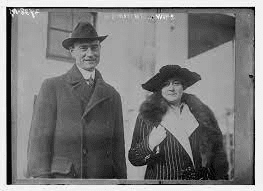
John’s Childhood
As nytimes.com, notes, John Purroy Mitchel was born in Fordham, a neighborhood in the Bronx. He was fortunate that in 1874, the western Bronx, including Fordham, became part of New York City, giving him the identity of a New Yorker.
John was born to a family of immigrants from Ireland and Venezuela. His father, James, was a Presbyterian and the son of a prominent Irish nationalist. James worked as the city’s fire marshal, having lived a tumultuous youth and served with his two brothers in the Confederate Army during the Civil War. John’s mother, a schoolteacher, was of Latin American descent. Her grandfather, Juan Bautista Purroy, served as Venezuela’s consul in New York City. The family was well-educated and financially secure.
John received his early education at a Catholic high school that was part of Fordham Preparatory School. He later attended Columbia College, the oldest undergraduate college of Columbia University and a member of the Ivy League, earning a bachelor’s degree. Afterward, he graduated with honors from New York Law School in Tribeca in 1902, launching his career as a lawyer.
Professional Career
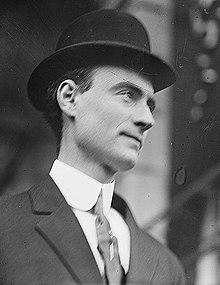
After graduating, John Purroy Mitchel quickly immersed himself in his legal career. His efforts paid off, as success seemed to follow him early on. In 1906, a friend hired him to investigate the activities of John F. Ahearn, the Manhattan borough president. Mitchel uncovered signs of incompetence, waste, and inefficiency, which led to Ahearn’s removal from office. This initial success brought Mitchel recognition and positioned him for future opportunities.
He joined a commission to oversee municipal finances, analyzing the expenditures of various city departments. His work significantly improved city financial management, turning his office into a vital regulatory body.
Mitchel’s reputation as a young reformer who could help the city prosper began to grow. He gained support within the Republican Party, which sought to counter the Democrats’ dominance in New York. By 1909, Mitchel was elected president of the Board of Aldermen, the predecessor of today’s City Council. In this role, he initiated financial reforms to reduce government waste and improve tax and budget management.
Mitchel also worked to reform the city’s transportation system, voting against extending permissions for certain companies to expand subway and elevated train lines. In 1910, his role allowed him to serve as acting mayor for six weeks after an assassination attempt on William J. Gaynor. During this time, Mitchel remained neutral during a garment workers’ strike, neither supporting the protesters nor siding with employers.
Political Career
John Purroy Mitchel was not the first politician in his family. His ancestors included a Spanish nobleman and an Irish nationalist, and many other family members were active in political life. This heritage likely influenced his drive to excel in public service.
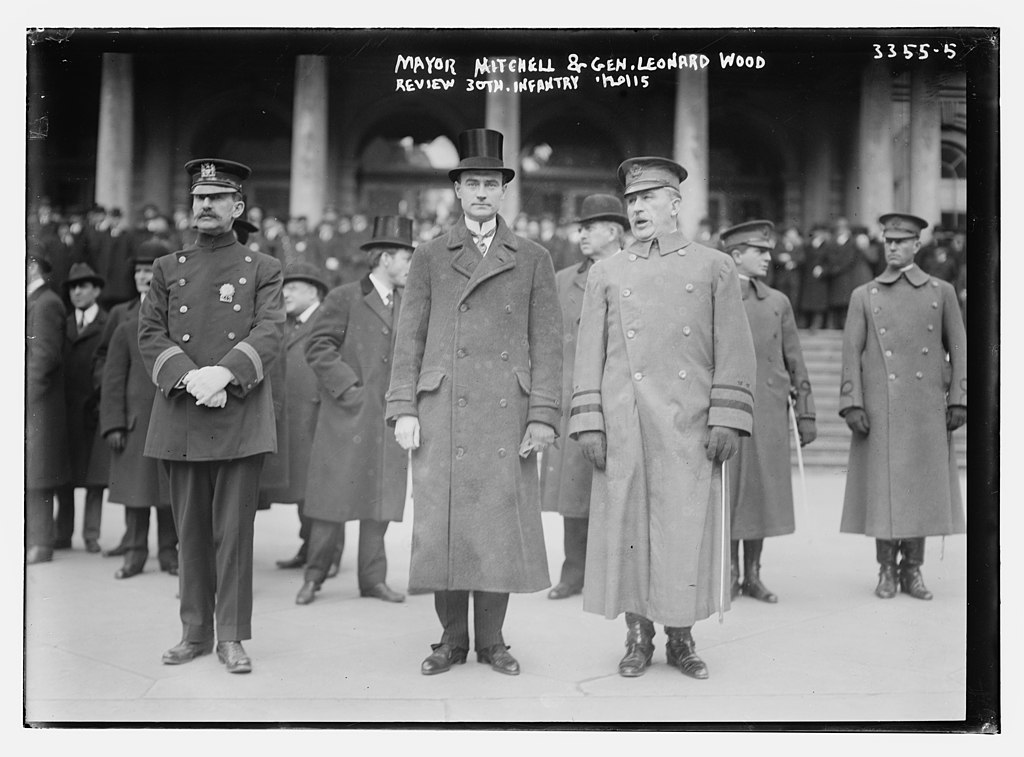
In 1913, Mitchel was nominated as a candidate for mayor of New York. His campaign focused on integrity, honesty, better conditions for businesses, and modernizing the city’s administration and finances. His message resonated, and at 34 years old, John Purroy Mitchel was elected mayor, defeating his Democratic opponent by 121,000 votes.
As mayor, Mitchel implemented reforms to reduce corruption in the police force, leading to a drop in crimes like theft, prostitution, and gambling. He streamlined city regulations, maintained neutrality during labor strikes, and made controversial decisions in education by merging vocational and academic programs under the “Gary Plan,” which combined work, play, and study. His reforms faced criticism, particularly from Catholic groups, after investigations into corruption in Catholic organizations alienated many of his supporters.
Mitchel also promoted military preparedness, advocating for universal military training. This stance alienated voters from German, Irish, and Jewish communities, contributing to his loss in the next election.
Mitchel’s Latin American Heritage
While Mitchel’s Latino heritage was overlooked during his time, it became a topic of interest a century later. Researchers from Fordham University delved into his ancestry and found that Mitchel descended from Spanish nobility. His great-grandfather, José Joaquín de Purroy, emigrated from Spain in the late 18th century. A lawyer and nobleman, José settled in Venezuela, where his son Juan Bautista Purroy was born. Juan later served as Venezuela’s consul in the United States, and his daughter, Mitchel’s mother, grew up bilingual.
In 1913, during meetings with officials from the Caribbean and Latin America, Mitchel openly acknowledged his Latin American roots. He expressed a sense of kinship and friendship with South America, recounting his fond memories of visits to the region as a child.
Mitchel’s Latino identity resurfaced during the 1969 New York City mayoral election when candidate Herman Badillo, then Bronx Borough President, expressed admiration for Mitchel. Badillo, along with fellow Puerto Rican politician Robert Carrión, highlighted Mitchel as a symbol of Latino heritage in New York politics.
Mitchel’s Death
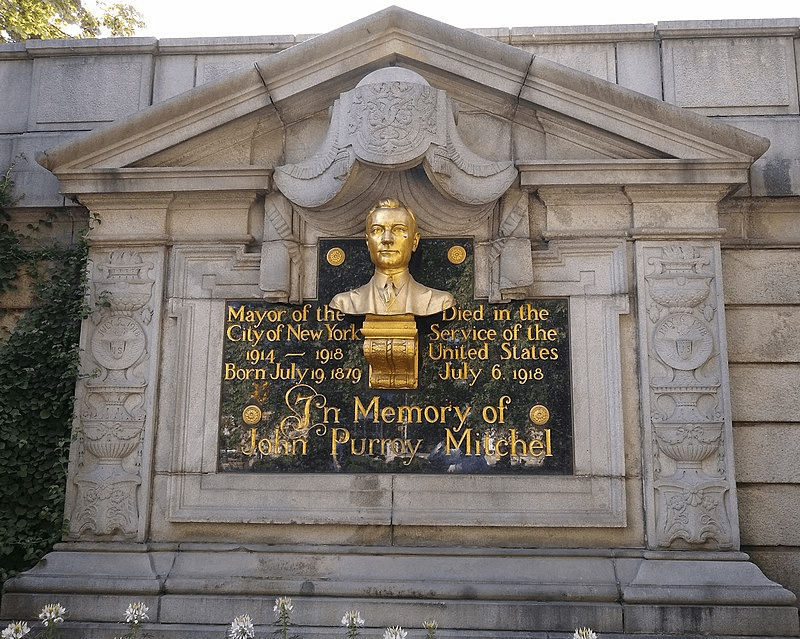
After losing re-election, Mitchel joined the Aviation Section of the Army Signal Corps as a pilot and officer. Tragically, during a training mission, his plane malfunctioned. Mitchel attempted to parachute to safety but died upon impact. His body was returned to New York, and he was buried at Woodlawn Cemetery in the Bronx in July 1918.