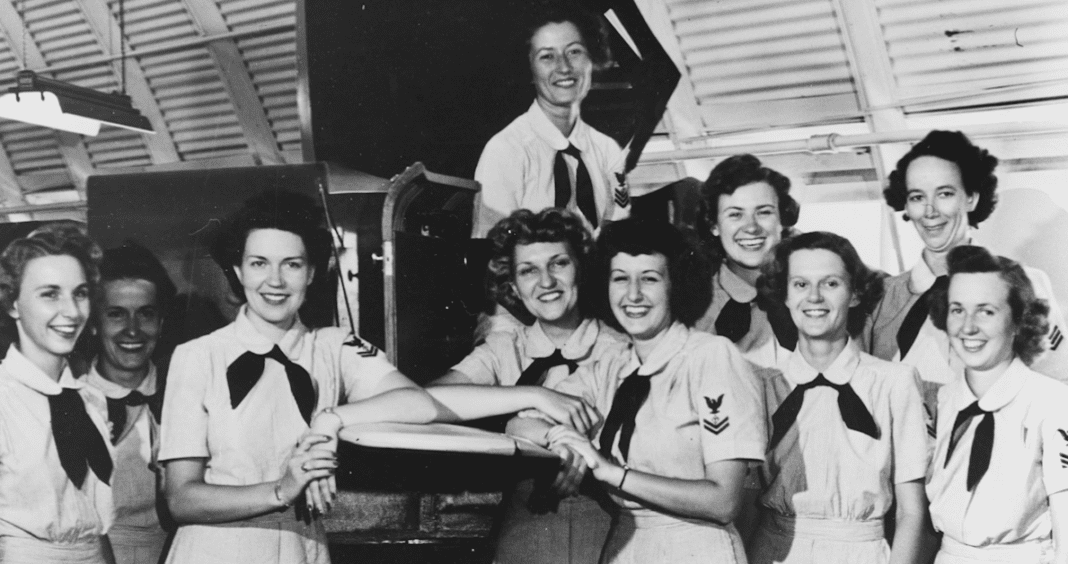

As the old saying goes, “a woman on a ship is bad luck.” And what if that ship is a military one? Good thing Americans aren’t so superstitious, or they might never have allowed the creation of this women’s organization under the U.S. Navy during World War II. But despite some obstacles, they did it. And they even set up a massive training center for these women on the campus of a Bronx college. We’ll tell you how it all happened in this article on bronx-yes.com.
The Path for Women into the Official Military
During World War II, U.S. Navy leadership recognized that bringing women into the military was a smart strategic move. Historically, women had already participated in military efforts; more than 11,000 women served in the Navy during World War I, although they didn’t receive official training or have a defined status at the time.
There was, however, significant resistance to women in military service. The idea of a women’s reserve had few supporters among senior Navy officials. But pressure from Congress, the public, and a push by the National Federation of Business and Professional Women’s Clubs forced the Navy to seriously consider creating a women’s division.
An English professor, Elizabeth Reynard, proposed the acronym WAVES (for Women Accepted for Volunteer Emergency Service). An advisory council from Columbia University, which included prominent women educators, helped organize and establish the standards for WAVES.
The United States Naval Women’s Reserve, WAVES, was established by the U.S. Congress on July 21, 1942, and signed into law by President Franklin D. Roosevelt on July 30. This gave the U.S. Navy the authority to accept women as officers and enlisted personnel for the duration of the war and for six months after its conclusion. The main goal of the law was to free up men for sea duty by replacing them with women in shore-based jobs. The first director of WAVES was Mildred H. McAfee, who had been the president of Wellesley College. On August 3, 1942, she was given the rank of lieutenant commander and was later promoted to captain.
The First Women’s Reserves in the U.S.
The requirements for admission to the officer candidate school included being between 20 and 49 years old and having a college degree. Two years of college with two years of relevant experience was also acceptable. Enlisted recruits had to be between 20 and 35 years old and have at least a high school education. Unmarried candidates were preferred.
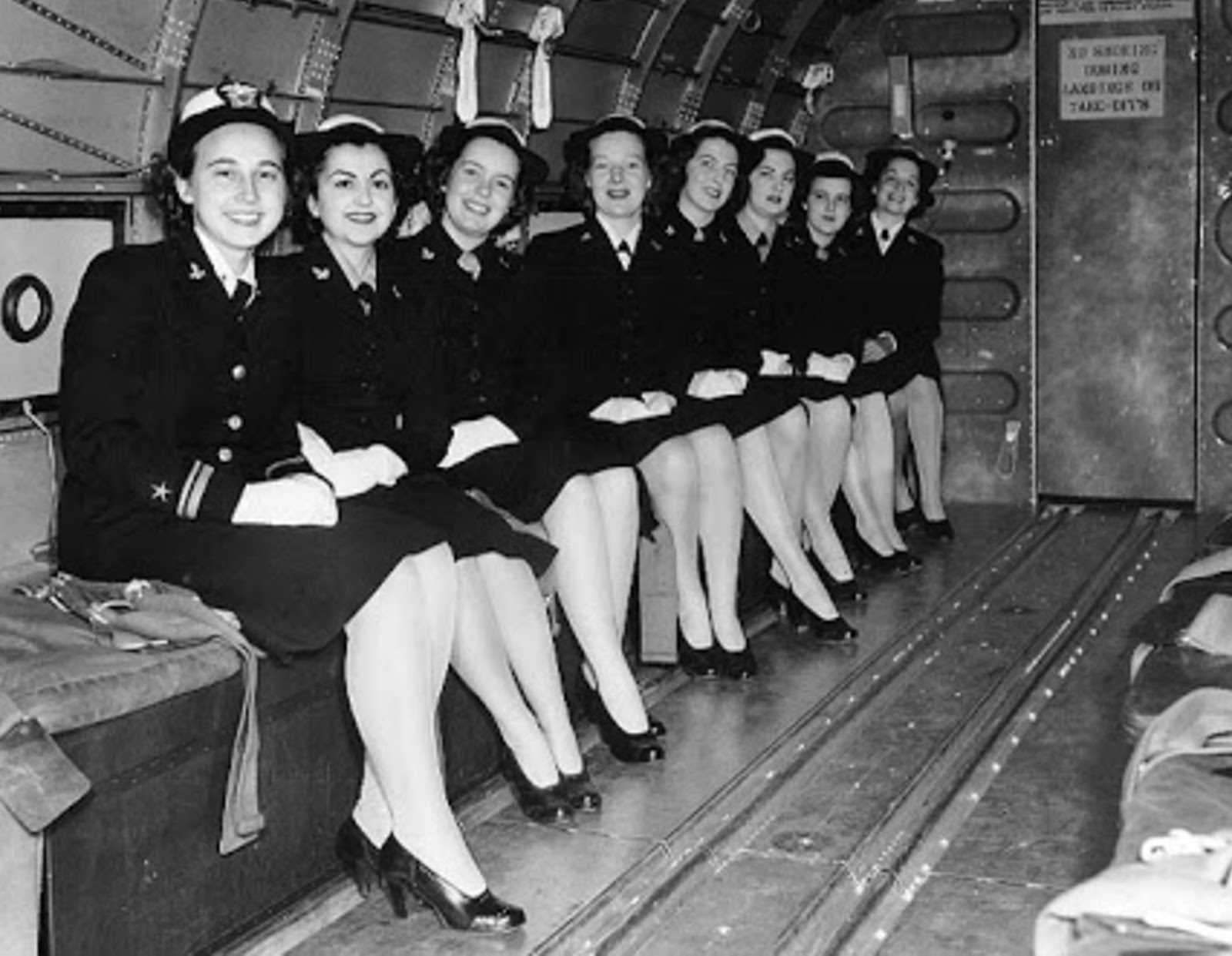
While the WAVES were predominantly white women, 72 African American women also served. Early on, most officer candidates were trained at Smith College in Northampton, Massachusetts, while specialized training was conducted at several colleges and naval bases. After that, some women continued their training in specialized courses and at military facilities.
WAVES served at 900 stations throughout the United States, with the only overseas base located in Hawaii. Many women officers worked in fields previously held by men, such as medicine and engineering. They performed a wide range of tasks, from handling paperwork to packing parachutes. Still, many women faced animosity from their male colleagues, and the lack of a clear policy in the Navy caused constant conflicts. The peak number of WAVES during the war reached 86,291. When the organization was first created, the quota was only 11,000 people: 10,000 enlisted and 1,000 officers.
Read the article about a sunken boat from the Bronx here.
Creating the WAVES Training Camp at Hunter College
When it became clear that the initiative was a success and the number of women in WAVES was rapidly growing, it was decided that a large training camp was needed to improve their readiness. Finding a space that could accommodate around 6,000 people was a difficult task. The Texas State College for Women in Denton had declined the idea of a naval training school, so officials considered using the Hunter College campus in the Bronx. The Navy unofficially approached New York City Mayor Fiorello LaGuardia and Hunter College President George N. Shuster with the request to set up a training camp, and both happily agreed to assist in the Navy’s efforts.
Bronx Borough President James J. Lyons also supported the idea of using the Hunter campus. Even his secretary, Margaret Person, signed up for WAVES. The costs for the necessary changes to the buildings were to be covered by the Navy. A yearly rent of $200,000 was also set.
In case of bad weather, classes were held in a nearby National Guard armory, and Walton High School provided additional classrooms. The official U.S. Naval School was established on February 8, 1943. On the same day, control of the Hunter campus was handed over to the military. A formal swearing-in ceremony for the first group of 350 women took place at City Hall.
The Main Problem: Housing
Since Hunter College had no dorms, providing housing for the women became one of the Navy’s most pressing issues. Initially, there were plans to build barracks on the college grounds, but that idea was rejected. So the Navy decided to use its authority under the Second War Powers Act to seize several high-rise apartment buildings nearby. As a result, 17 buildings located near the college were taken over for use as Navy barracks.
The tenants, unhappy with their forced eviction, organized protest rallies, but to no avail. In total, over 600 families (1,860 people) were evicted. The City Commission helped the residents with moving and covering expenses, but this did not make up for the immense inconvenience and financial losses, not to mention the emotional toll.
But besides the disgruntled residents, the Navy had another problem. The emptied apartments had to be converted into barracks. On an urgent basis, everything was repainted, and the electrical systems were replaced. The Department of Transportation helped with furniture, which was brought from passenger liners and merchant ships like the Manhattan, the America, and the Normandie. The rooms were equipped with wooden bunk beds, lockers, dressers, tables, chairs, and lamps. Room sizes varied, and each one housed between two and four girls. Kitchens were used for laundry and storage but not for cooking.
Training and Life at the Camp
The training program at the camp lasted between six and eight weeks. In September 1943, when there was a great need for personnel, the training period was shortened to four weeks. Every two weeks, about 1,700 women would arrive, and the same number would be sent out for specialized training or to their assignments. The base constantly housed about 5,000 women.
Organizing meals for so many people was a serious challenge, as it far exceeded the capacity of the Hunter cafeteria, which normally served only 1,500 people per day. For example, the monthly grocery list included 56,000 pounds of beef, 32,000 pounds of liver, 13,000 pounds of pork, 11,000 dozen eggs, and other food items.
A refrigerated room had to be rented to store food, and the kitchen facilities were significantly expanded. Meals were served in groups, and each meal was limited to 17 minutes. There was often a shortage of dishes and utensils as well.
Providing uniforms for the WAVES was a joint effort by six large New York department stores, led by Retailer’s Uniform Agency, Inc. A budget of $200 was allocated for each uniform, and the design was created by French couturier Mainbocher. But initially, there were also shortages in this area, so the girls often had to train in their civilian clothes and a Navy hat.
The pay for WAVES recruits was $50 a month, and the women were subject to the same disciplinary requirements as the men. On the camp grounds, reading newspapers and listening to the radio were forbidden. The day began with an early reveille at 5:30 a.m. and taps at 9:30 p.m.
A typical six-week program included: 36 hours of classroom instruction, 24 hours of practical exercises, 19 hours of physical training, and 14 hours of film viewing. Additional hours were dedicated to regimental review, assemblies, military orientation, vaccinations, pay issues, fingerprinting, ID card photos, orientation courses, and lectures on insurance and bonds.
Training sessions covered Navy history and traditions, military communication, insignia, aircraft, ships and equipment, nautical terminology, etiquette, military discipline, and shore-based facilities.
Physical training was an important part of the program. The women had access to seven gyms, a swimming pool, and an outdoor training field. They played tennis, softball, volleyball, and badminton, and sometimes competed against each other. A mandatory part of the program was a two-hour daily march.
WAVES in the Bronx After the War
In August 1945, when the war ended, about 3,000 women from WAVES were still in training. On November 2, 1945, the Navy Department officially announced its intention to close the training school. City Hall had also long been pushing for the return of the Bronx buildings for college use.
On February 1, 1946, during a ceremony, Captain Frank W. Schmidt handed over the keys to the Bronx campus buildings to the college’s president, Dr. George N. Shuster.
In total, 91,138 women were enrolled at the camp during its three-year existence, including 85,885 WAVES, 1,914 SPARS, and 3,339 female Marines.
The Navy Department wanted to terminate the agreement with Hunter College quickly. After announcing the closure, a one-time payment for the restoration of the Bronx buildings was offered, but the head of the Board of Higher Education rejected the proposal due to the difficulty of carrying out the work under those conditions.
It wasn’t until 1948 that the New York City government completed the financial settlement for the building restorations, totaling $313,701.54, which included legal fees and an assessment of the damage conducted by the architects who had worked on the Hunter College buildings. All the residential buildings that the Navy had seized in the 1940s were returned to civilian use. The three-foot ship’s bell left by the Navy in 1946 still stands in front of the college, a reminder of the campus’s special purpose during World War II.
Read the article about a prominent military woman from the Bronx, but not from the Navy, from the Air Force, by following this link.