
We all try to plan our lives so that nothing surprising happens. After all, calm and stability is a sign of the intended path. But sometimes, something makes adjustments in our lives, at which point, at the very least, we are surprised at what has happened to us. In particular, when a 63-foot-long military rescue boat, once used as a houseboat in the Bronx, was found in the Gowanus Canal, it became a sensation for the entire New York City area. After all, it’s not something that happens very often, which makes you wonder what secrets can be revealed in abandoned city canals, sewers, or coastal waters. Another mystery that has puzzled the city’s residents is the skeletons found on the shores of Hart Island (near the Bronx), which for hundreds of years served as a cemetery for those who were no longer needed by the wealthy population of New York. Discover more about the canal, the military rescue boat, the island and other mysteries of the city by visiting the bronx-yes.
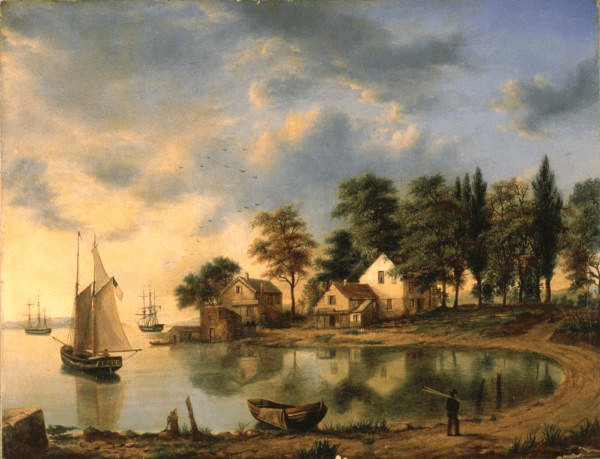
The polluted canal in Brooklyn where a boat from the Bronx was found
According to Business Insider, New York is such a tremendous city that there are quite a few places that city officials are unaware of or no longer interested in. One of them is the Gowanus Canal in Brooklyn. The area was originally a creek where locals fished, caught oysters and built homes. The Canal was built in 1774. During the Revolutionary War, the Battle of Brooklyn occurred on its banks. After the British prevailed, the American regiment retreated behind the swamp, running alongside the Canal while being pursued.
During the 19th century, the canal was essential for operating mills, supporting industrial enterprises and facilitating the daily operations of around 100 vessels. In the early 21st century, the canal became one of the most polluted waterways in the United States. It was used as a dumping ground for waste and untreated sewage. As a result, the bottom of the canal now contains significant concentrations of hazardous bacteria and heavy metals, including arsenic. The water’s arsenic levels are 60 times higher than the safety threshold. The cause of this pollution is the environment, specifically classic residential buildings and warehouses converted into offices. During the day, business life flows peacefully here, while in the evening, young people and visitors to trendy bars, stylish cafes and music venues fill the entire 4th Avenue surroundings.
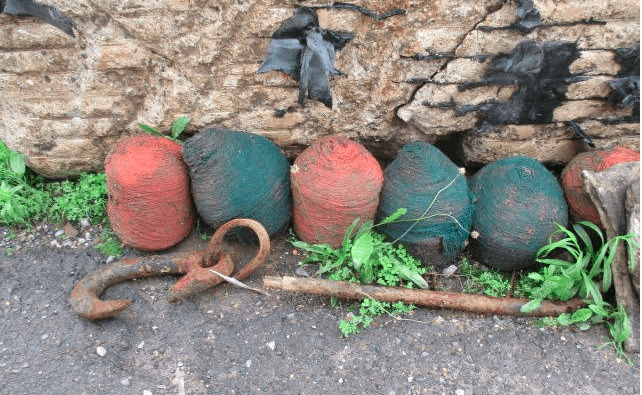
The canal problem was brought to the attention of the U.S. Environmental Protection Agency (EPA), which committed to cleaning it up. The project cost 50 million dollars. When work started, numerous relics from New York City’s industrial past were found, including a military boat used for emergency pilot rescue, old wagon wheels, a ceramic cauldron, spools of thread and numerous other items. And this, believe it or not, at a time when only a test study was conducted.
Discovering a military rescue boat
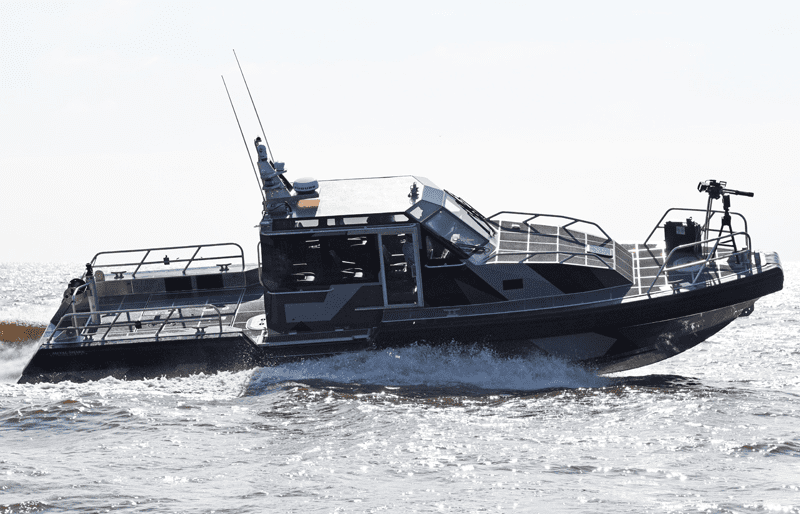
The crash rescue boat aroused the most curiosity among the various items discovered in the canal. The 63-foot-long boat was built in Miami, Florida, in 1943 during World War II. Its primary function was to rescue pilots who had to make an emergency landing on water or whose planes had crashed into the water. It was also used to assist crews of ships transporting supplies to Britain and protection for these convoys. After its service in World War II, the boat was deployed in the Korean War. The US military used it as a crash rescue boat for about twenty years until 1963. After its military service ended, the military rescue boat was refurbished, converted into a Fire Island ferry and later a houseboat in the Bronx. The military rescue boat was relocated to Brooklyn and used as a floating art space and exhibition hall in Brooklyn. Additionally, it served as a party venue for the city’s LGBT community. The question of how it ended up at the bottom of the canal still remains a mystery to researchers and EPA.
Functions of a military rescue boat
In the past, during wars or disasters, states have typically not provided rescue services for their sailors or civilians. The victims had to rely on themselves since there were not enough boats for that purpose. However, with the development of industry and the growing role of the military, especially during World Wars I and II, the United States began to recognize the crucial role of a navy in global affairs and the value of human life. As a result, numerous shipyards were established. Some builders constructed naval warships, while others focused on merchant ships, including small riverboats, barges, tugboats and specialized military boats used in the coastal areas. The vessels were primarily built for the United States Shipping Board and the United States Maritime Commission. After the war, the ships and boats became obsolete and were repurposed for other uses. Unfortunately, there is virtually no information on how these vessels were utilized after the war, including details on their construction programs, vessel design and much more.
Information about finds and their fate
According to the EPA’s report, the discovered military rescue boat itself has no historical value, as it has undergone numerous repairs and had its parts replaced. The boat also had spools of thread next to it from Zobel Color Works, the textile and dye manufacturer mentioned earlier.
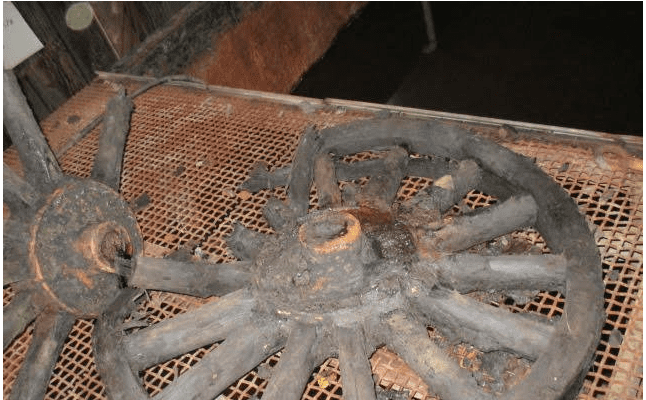
The archaeologists tasked with cleaning the canal faced challenges in restoring the discovered relics. The artifacts had been submerged in water for an extended period, resulting in corrosion and a foul odor. Additionally, they exhibited traces of petroleum and other substances.
Houseboats of the Bronx and the role of Hart Island
As previously mentioned, the military rescue boat discovered in the canal had been used as a houseboat for some time. In fact, there are many similar houses in the Bronx where people have lived since the 19th century. What it comes down to is that it’s a cheap place to live, with a beautiful view and a high level of privacy. Among the places in New York where you can live on or near the water are Newtown Creek, the Hudson River in the Upper West Side of Manhattan, Newport Marina in Jersey City, City Island in the Bronx, Eastchester Bay and Westchester Creek Marina near the industrial park in the Bronx. Additionally, there are prison islands and boats in the area.
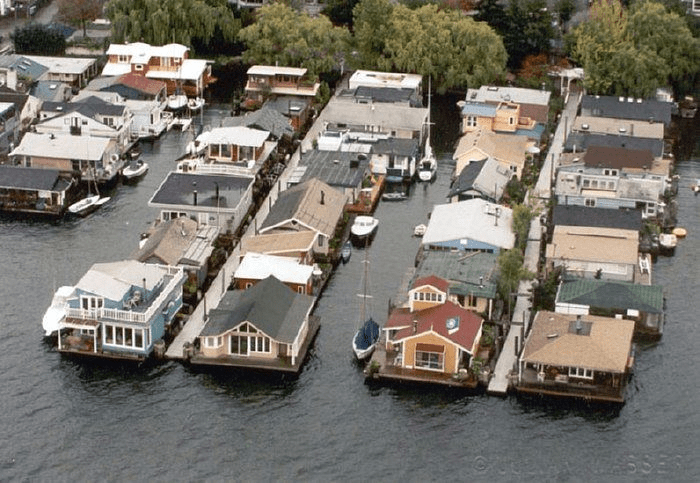
While City Island is home to two houseboat lots, Westchester Creek has only a handful of permanent residents. These include François Guillet, the owner of the marina who rents out houses, Daniel Torrez, an ex-shop owner in Greenwich Village who now has an art studio in a houseboat and Uncle Bob, a disabled former security guard who drinks beer to ease his pain. In the vicinity, there is a road, a gas station, and a McDonald’s. The marina was built in 1957. Historically, this area has been home to police officers, schoolteachers, and other laborers who could not afford or chose not to pay the high cost of rent.
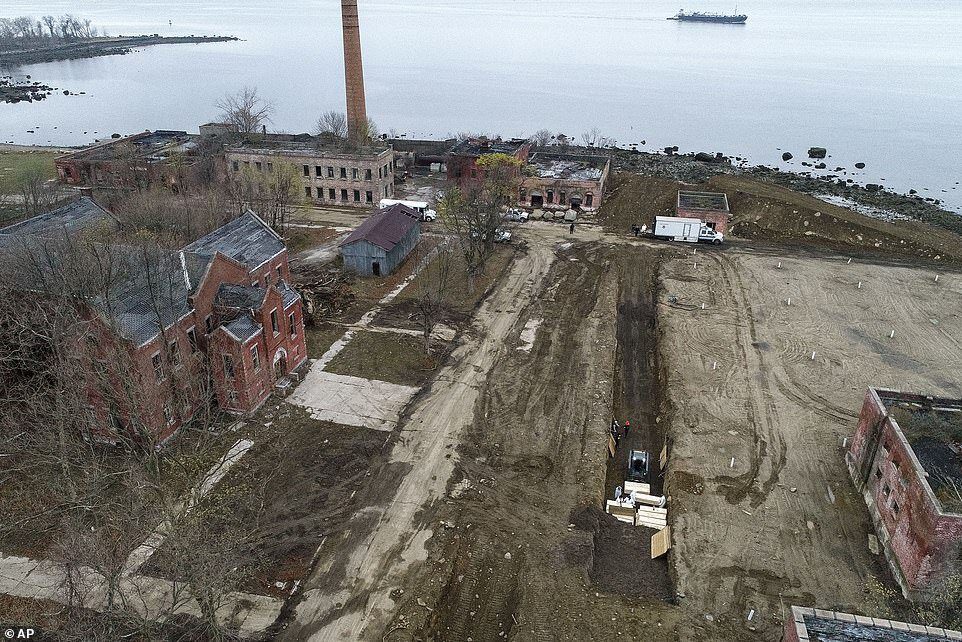
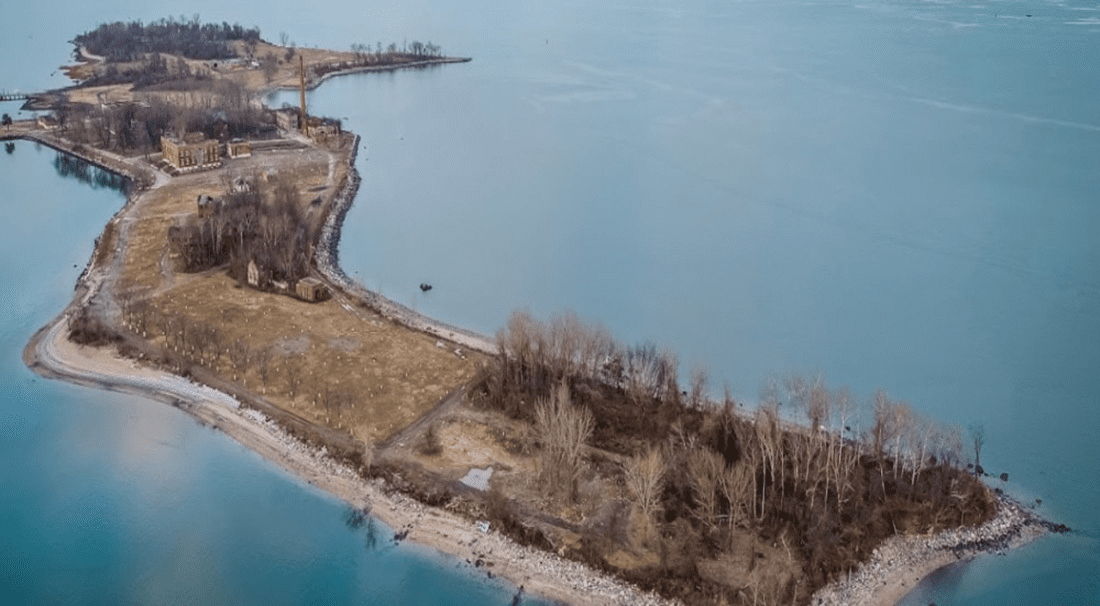
Hart Island, located near the shores of the Bronx, has served various purposes throughout history, including as a prison, mental hospital, quarantine center for tuberculosis and yellow fever patients, and reformatory for delinquent boys and workhouse. During the American Civil War, this island served as a burial ground for the deceased. Later, the New York City government once utilized this island as a burial ground for impoverished people who couldn’t afford their own funerals. As a result, it has become one of the largest mass graves in the United States. The government has taken on the duty of providing a final resting place for those who were economically disadvantaged, marginalized, or whose remains were left unclaimed. Over time, storms have eroded the island’s shores, revealing its hidden “treasures” of human bones beneath the surface.
It is noteworthy that a military rescue boat was discovered in the Gowanus Canal, but even more intriguing are the numerous human remains found on Hart Island. These discoveries raise more questions than they answer. New York holds many secrets, and as 21st-century inhabitants, we have a unique opportunity to uncover and share them with the world.