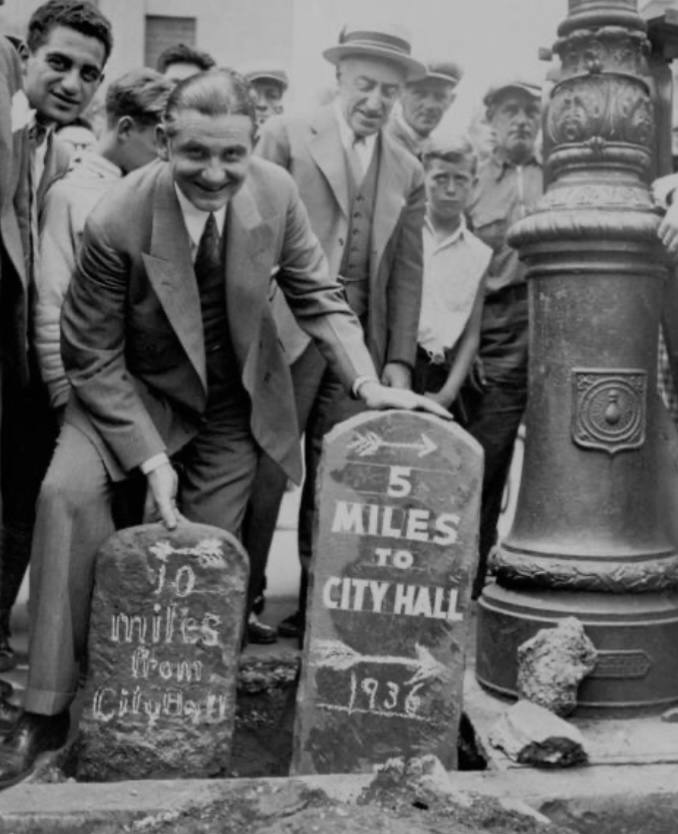

This American Democratic politician led the Bronx from 1934 to 1962, making him the longest-serving borough president in the area’s history. His career, vibrant personality, and skill at marketing the Bronx as a distinct brand made him a notable figure in the city’s history. Lyons headed the borough during challenging times—the Great Depression, World War II, the post-war construction boom, and the beginning of the borough’s socioeconomic decline. How he did it — reed on bronx-yes.com.
Innate Charisma and an Entrepreneurial Flair
James Lyons was born on February 12, 1890, on Leroy Street in Manhattan—the same street as future New York Mayor Jimmy Walker. The son of Irish immigrants, he grew up in an environment where work started before adulthood. When James was just three years old, his family moved to Highbridge in the Bronx, which was then a green, almost rural neighborhood. In his later years, Lyons nostalgically recalled riding a pony and cart under shady trees as a boy, selling fruit to local residents.
“In the summer, kids from Manhattan would come up, and we called them ‘city ducks,'” he remembered. “They would try to steal apples from our gardens, and we, the ‘Bronx hedgehogs,’ would chase them off the bridge with rocks.”
James finished school early at 13 and immediately went to work as an office boy for the Surpass Leathercompany, earning three dollars a week. Tall, broad-shouldered, and witty, Lyons quickly climbed the career ladder. He swiftly moved from being an errand boy to a successful salesman, and then a sales manager, even during the Great Depression.
His life motto was simple:
“With the right approach, you can sell anything to anyone.”
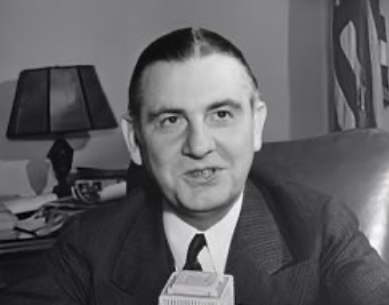
To prove this, James once claimed he could sell fans to Eskimos. And he did it! In his career, he sold so much leather that it could have wrapped four million women’s legs. Even when some of the leather turned out to be defective, Lyons wasn’t fazed. He came up with the idea of punching holes in it and selling it as a new fashion trend: “breathable leather.”
Young James’s appearance matched the image of a true New York “self-made man.” He was always in a dark suit and a white shirt with a stiff collar, and his shoes were exclusively custom-made from goatskin. He always had at least 12 pairs of shoes in his closet. Though, to be fair, his taste in ties was, to put it mildly, specific.
This was James Lyons before politics made him the most influential figure in the Bronx for decades. He was a salesman who learned to sell not just leather—but an entire borough.
The Politician Who Turned the Bronx into a Brand
In the early 1930s, James Lyons had no political ambitions. He had already earned respect as the president of the Bronx Grand Jurors Association, ran his business as an experienced entrepreneur, and had only a moderate interest in public life. But everything changed in 1932 when Edward J. Flynn, the influential leader of the Bronx Democrats, called him. Flynn offered him the chance to run for Borough President.
“I was stunned,” Lyons later admitted.
But he agreed. Only after accepting did he look up the job’s salary in The World Almanac—$15,000 a year. Lyons won, and not just by a small margin, but by a landslide. That marked the beginning of his 28-year tenure as Bronx Borough President—seven consecutive terms without a single defeat. Lyons joked that politics was just like business, only with more consideration for the human factor. In his opinion, New York City was the largest corporation in the world, and a borough had to be managed like a regular office.
Despite his seriousness in business, James Lyons remained a witty and masterful showman. His office ran like clockwork, and Lyons himself worked like a steam engine: attending 8-10 meetings a night, constantly present at ribbon-cuttings, and never taking a long vacation. He was particularly bothered by how references to the Bronx in vaudeville shows or movies would instantly draw laughs. Lyons wanted to change that. He began to promote the Bronx as the “Borough of Universities,” appealing to the large number of educational institutions there. At the height of his cultural campaign, he even tried to bring opera to the Bronx. The Bronx Opera Company he founded was supposed to have seven performances. But after the first, almost empty, hall, the rest were moved to Manhattan.
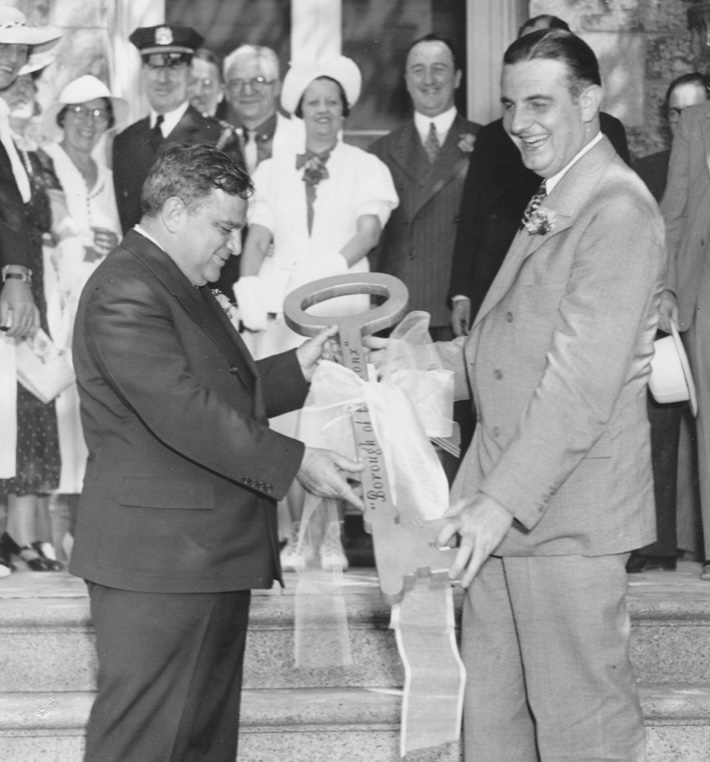
When the opera didn’t take off, Lyons switched to grammar. After Deputy Mayor Henry Curran publicly used the word “contact” as a verb, Lyons ironically founded the “Henry Curran University”—a fictional institution that exposed the linguistic sins of officials. On its behalf, his office sent grammatical corrections to politicians and even forced the police commissioner to apologize for a slogan on a sign: “You only live once” instead of the more proper “You live but once.”
For all the jokes, humor, and theatrics, Lyons remained an effective administrator. During his time in office, approaches to the Triborough Bridge were built, the Whitestone Bridge was completed, he lobbied for the name LaGuardia Airport for the new airfield in Queens, and he proposed holding the first UN Security Council meetings in the Hunter College gym—in the heart of the Bronx.
Liberals constantly attacked Lyons—not just for his politics, but for his lavish spending. But Lyons never shied away from scandal. When he was criticized for buying an expensive grand piano for Queens College, he simply quipped:
“Let them say they have the most expensive piano in the city!”
To which the city council president replied:
“And we in the Bronx already have the most expensive instrument—that’s you.”
Still, James Lyons is most remembered for what he did for the Bronx’s image. He was the one who taught the Bronx to talk, laugh, and sell itself to the world.
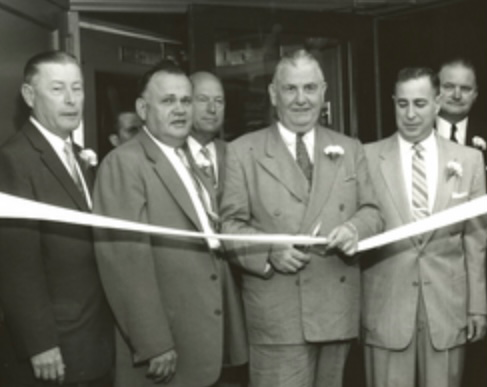
Lyons’s Most Famous Political Stunt
In April 1939, James Lyons orchestrated one of the most famous public displays of his time—and certainly the most theatrical “takeover” in New York history. The target of this brilliant PR stunt was the quiet enclave of Marble Hill—a patch of land that geographically belongs to the Bronx but is legally considered part of Manhattan.
Lyons, ever the showman, arrived there in a gleaming limousine. He got out, proudly climbed a rocky outcrop, and, smiling broadly for the cameras, ceremoniously planted the Bronx flag with the motto “Ne cede malis”—”Yield not to misfortune.” Raising his hands, he declared:
“Marble Hill is now part of the Bronx!”
Dozens of local residents gathered on the street, and the reaction was not exactly triumphant: whistling, jeering, and vocal outrage. Some even thumbed their noses at Lyons—an old gesture of contempt. To add to the show, four U.S. Army tanks were spotted nearby. It was a complete coincidence, but Lyons didn’t miss the chance to pose for a picture with them, as if to confirm the scale of his “military campaign.”
Despite the performance, the residents of Marble Hill remained loyal to Manhattan. 95% of them opposed any changes and even petitioned the state governor, asking him not to betray their Manhattan identity. Lyons was called before the Committee of Estimate, where his symbolic annexation was criticized, and he was soon forced to remove the flag.
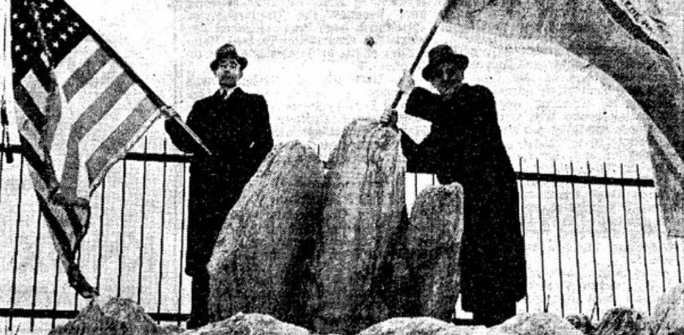
As he retreated, he quipped a line that immediately became a classic quote:
“Good riddance. We don’t need those snobs in the Bronx anyway.”
And while Lyons did not win Marble Hill, he won something else—press attention, publicity, and another page in his great urban legend.
The End of His Career
After nearly three decades as Bronx Borough President, on July 12, 1961, James Lyons put an end to his political career. In a letter to his long-time ally and mentor, Congressman Charles Buckley, he officially announced his resignation. The reason wasn’t just fatigue—rumors behind the scenes suggested that the U.S. President himself had offered him a federal position worthy of a true New Yorker’s experience.
And indeed, shortly after, Lyons was appointed Special Assistant to the U.S. Commissioner for the World’s Fair. His leadership in the Bronx was marked by significant changes. Residential neighborhoods were developed, parks, schools, and roads were improved, and small businesses and commerce thrived.
Lyons knew how to do more than just build roads—he built an image. He called himself “the salesman of the Bronx brand” and loved to repeat:
“The Bronx is not just a borough. It’s a brand, and I’m its salesman.”
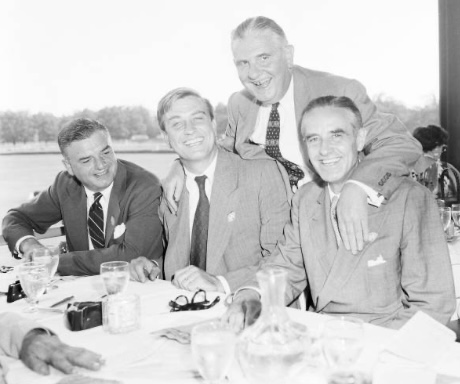
Back in 1917, Lyons married Gertrude O’Brien—the daughter of the first Sheriff of the Bronx. The couple had three children: James Jr., William, and Gertrude. By the time he left public life, he had 10 grandchildren.
James Lyons’s leadership left behind not just roads and buildings, but also a powerful image for the borough. He retired, leaving the Bronx flag flying high.