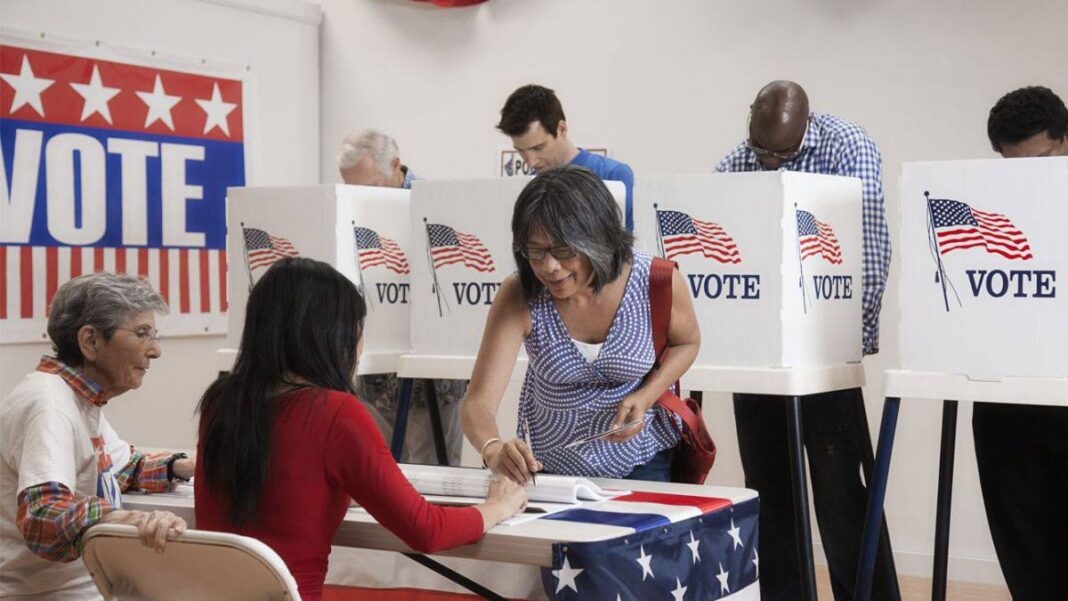

In the Bronx, where politics has long been intertwined with street life, a new high-profile corruption case has emerged. The main figure is Nicole Torres, the elected leader of New York’s 81st Election District and a former employee of the city’s Board of Elections. Scandals have never been rare in Bronx politics, but the Nicole Torres case was particularly shocking to the community: a person entrusted with the electoral process was found to be undermining it herself. This is the story of this episode of lost trust in the Bronx government on bronx-yes.com.
Another Scandal in the Assembly
Nicole Torres had a reputation as someone who understood the inner workings of the political system. For many residents, this seemed to be a guarantee of transparency and stability; after all, who better to protect democratic procedures than election officials? But it was this very position that opened the door to corruption for her.
Law enforcement officials spoke sharply and without diplomacy. Matthew Podolsky, the acting U.S. Attorney, emphasized:
“Torres systematically took bribes and undermined trust in the electoral process. Her actions are a blow to the heart of democracy.”
Christy M. Curtis of the FBI added:
“She stole not only money but also the trust of the people she was supposed to protect. Elections must be clean—otherwise, the entire process loses its meaning.”
Jocelyn Strauber, Commissioner of the Department of Investigation, stressed that when a public servant uses their power for personal gain, the entire community suffers. And this can be considered a betrayal of the voters.
Bronx residents took the news hard. Some recalled that during elections, certain polling sites looked chaotic. People would show up to work, but their names weren’t on the lists. They assumed it was a coincidence. But it turns out it was part of a fraudulent scheme.
Now, instead of a political career, Torres faces a court sentence—and this will serve as another lesson that corruption can destroy even the smallest corner of democracy.
Phantom Voters: How Nicole Torres Profited from Invisible Poll Workers
Since at least 2018, Nicole Torres, then an influential elected official and employee of the New York City Board of Elections, turned Bronx elections into her personal testing ground for fraud. What should have been a straightforward process of staffing polling sites and supporting democracy became a tool for personal enrichment for Torres.
Her scheme was remarkably sophisticated. The Board of Elections’ reports included so-called “ghost workers”—people who never existed at the polling sites. They didn’t show up during early voting or on Election Day. However, in the special attendance booklets that recorded staff work, their signatures were listed next to the names of real workers. These documents created the illusion that the “phantom” workers had done their jobs honestly, and no one from the outside could guess the deception.
Torres didn’t act alone. She enlisted a team of coordinators who had control over the booklets at various polling sites. At her direction, they would sign on behalf of the absent people. The salaries for the “dead souls” were sent by mail or to bank accounts, after which the money was distributed among the participants of the scheme.
The entire process was thought out down to the smallest detail. Coordinators and Torres communicated by phone, sent text messages, exchanged the personal information of the absent workers, and decided who would forge a signature in the right place. They meticulously tracked every step to bypass the system and ensure a stable and continuous flow of cash.
Federal investigators claim that through this scheme alone, Torres personally received at least $36,000 in illegal profits, and her accomplices also received their share. But the case wasn’t just about money. It was a brazen deception of a community where trust in elections was already incredibly fragile. Every forged signature and every dollar pocketed eroded the foundations of the democratic process and cast doubt on the integrity of elections in the Bronx.
This fraud is a vivid example of how power, combined with impunity, can turn an institution that was meant to serve the people into a mechanism for personal enrichment and manipulation. For Bronx residents, it’s not just a story about money; it’s a story about a betrayal of trust and the violation of the social contract that should guarantee fairness in elections.
The Nicole Torres Scheme: How Election Worker Positions Were Sold in the Bronx
But “ghosts” in the elections weren’t the only source of “dirty” money from the polling sites. According to the indictment, for several years, from at least 2019 until August 2024, Nicole Torres systematically built a scheme that allowed her to receive illegal profits from Bronx residents. The premise was that anyone who wanted to become a poll worker had to pay a set amount, usually $150, directly to Torres or a local organization she controlled, known as the “Bronx Organization.”
The process essentially looked like a semi-official mandatory contribution: people handed over cash, used mobile apps like Zelle or CashApp, or made money transfers or even wrote checks. Payments were often made out to the “Bronx Organization,” but Torres found a way to move these funds into her own pocket. She would change the recipient’s name on money transfers or checks—writing her own name, “Nicole Torres,” instead of the organization’s, and then depositing the funds into her personal bank account.
In this way, over the years the scheme was active, Torres illegally collected at least $28,000. At the same time, the “Bronx Organization” she controlled also benefited from the fraud, receiving a portion of the payments.
In exchange for the money, Torres guaranteed people spots on the list of poll workers for the next election. Essentially, she turned the appointment of election workers, a responsible civic function, into another source of personal enrichment.
Guilty Plea and Consequences
Nicole Torres has pleaded guilty to two serious crimes: conspiracy to commit extortion under color of official right and conspiracy to commit mail fraud. Each of these charges carries a maximum sentence of up to 20 years in prison, although the final sentencing decision is up to the judge.
According to her plea agreement, Torres will have to pay $40,970 in fines and compensate the government for nearly $150,000 in damages.
Her career began in 2016 when she started working for the New York City Board of Elections. At the time of her suspension in August 2024, she was earning a salary of nearly $57,000 per year. In October of that year, she was officially fired due to the criminal charges.
Officials praised the scope of the investigation. Acting U.S. Attorney Matthew Podolsky highlighted the role of the FBI and the New York City Department of Investigation in gathering key evidence in the case. The matter is being handled by the Public Sector Corruption Unit, with federal prosecutors Benjamin M. Burkett and Rebecca T. Dell leading the prosecution.
Other agencies were also involved in the investigation, including the Office of the Inspector General for Public Sector Corruption, which was led by Gina Nicole Diaz, Trenton Sweeney, Eleanor Rivkin, Christopher Ryan, and Dominic Zarrella.
The New York City Department of Investigation (DOI), one of the oldest anti-corruption agencies in the country, stressed that the Torres case is a prime example of how violations, even at a local level, can undermine trust in democracy. Despite her guilty plea, Nicole Torres remains legally innocent until a court sentence is handed down.
This story is not just about salary fraud and fake signatures. It’s a lesson on how the abuse of power and public trust can erode the foundation of local democracy and confidence in elections.